TL;DR
Problem: Your toilet rocks or shifts when you sit down, and every flush flexes the seal under the base.
Solution: Check the base bolts with small, even turns; if the floor is slightly uneven and the flange is sound, level the base with toilet shims. Never crank the bolts to force a rocking bowl flat.
When to call: Call a local specialist if rocking continues, a bolt spins without gripping, or you see water or smell sewer gas at the base. Call (714) 410-0362 during open hours.
In this guide
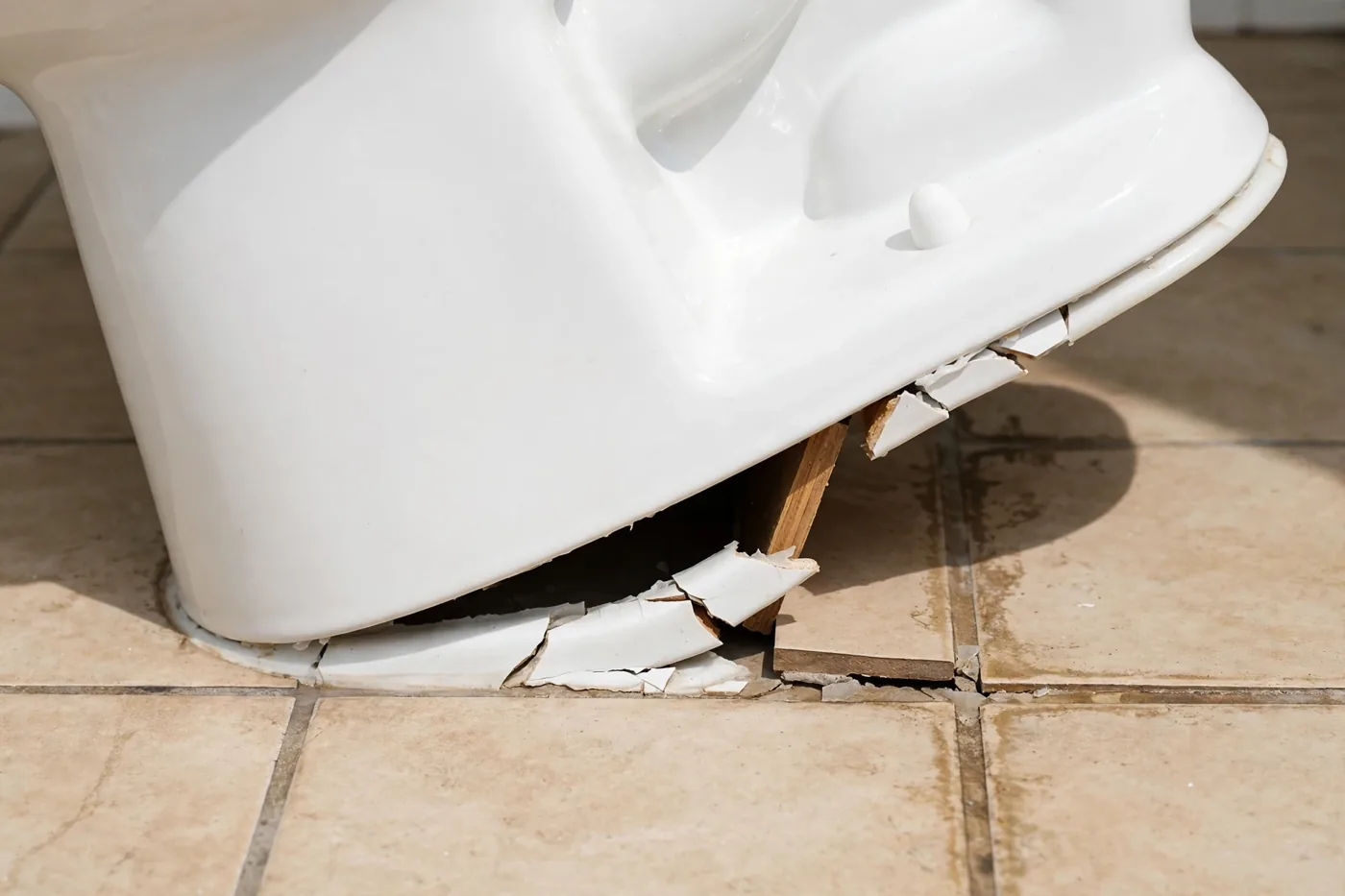
A toilet should feel like part of the floor. When it rocks — even a little — something under the base is wrong, and the motion does damage every day it continues. The seal between the bowl and the drain flange is soft. It is made to sit still under steady pressure, not to flex back and forth with every use. A rocking toilet pumps that seal open a fraction at a time, until flush water starts slipping under the base and sewer gas finds the same path into the room. By the time you see a stain at the base or catch a smell, the floor under the bowl has often been getting wet for a while.
The instinctive fix — grab a wrench and tighten the base bolts hard — is the one move that can turn this job from modest to major, because porcelain cracks under uneven bolt pressure. This guide shows the safe order of checks: bolts first with a light touch, floor level second, shims where they belong, and a clear line where the toilet needs to come up so the flange and seal can be inspected.
Why a toilet rocks — and why it matters
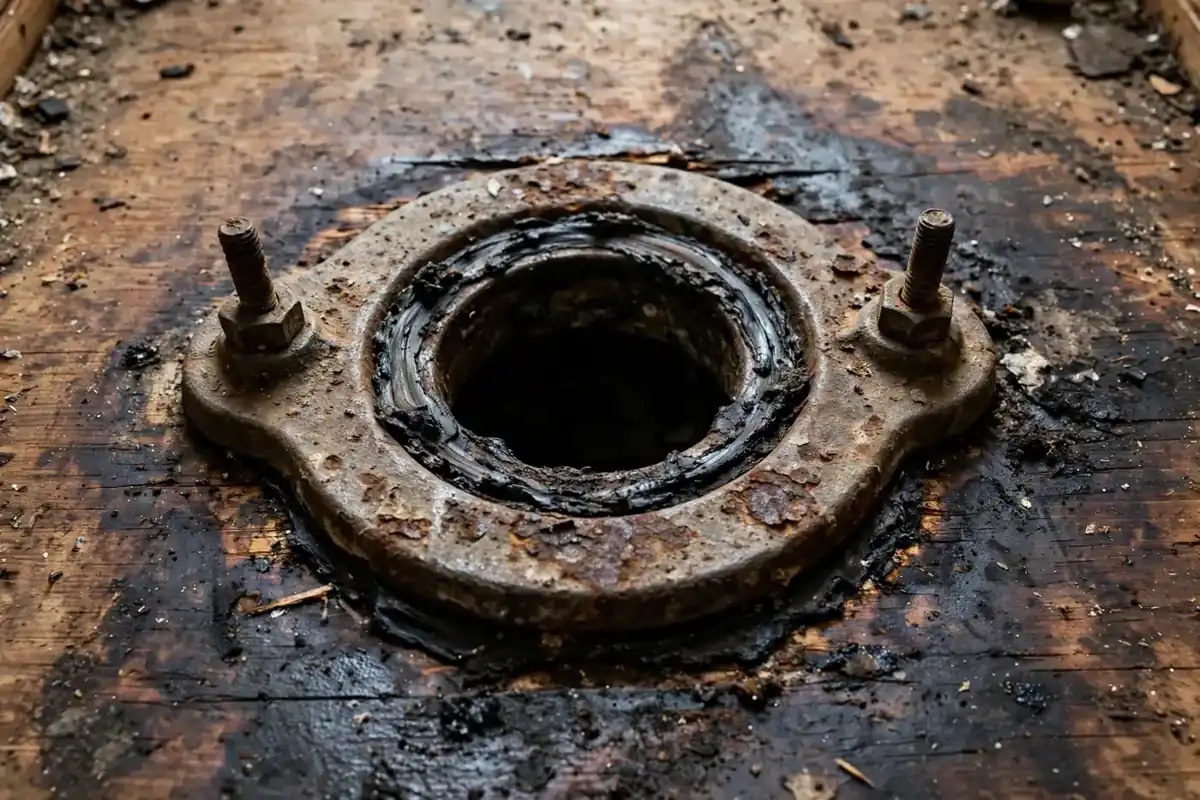
Four causes account for nearly every wobbly toilet in Fountain Valley homes. Loose closet bolts are the simplest: the two bolts that hold the bowl to the flange back off over years of use. An uneven floor is next — tile set over an older subfloor, a high spot at a grout line, or flooring that was cut a little proud around the base. Flange height is the third: the flange should sit on top of the finished floor, and when it sits too high the bowl rests on the flange instead of the floor and rocks on it; too low, and the seal has to bridge a gap it cannot hold. The fourth cause is the floor itself softening from moisture, common in 1960s and 1970s bathrooms where a slow leak has been feeding the subfloor around the flange for years. That last cause is why rocking plus water at the base always means the toilet should come up for a look rather than get tightened down harder.
Step-by-step safe checks for a wobbly toilet
Find the direction and size of the rock
Sit on the closed lid and shift your weight front to back, then side to side. Note which way the bowl moves and how far — a slight give in one direction tells a different story than movement in every direction. Kneel and watch the base edge against the floor while a second person rocks it gently; you can often see the gap open on one side.
Pop the bolt caps and check each closet bolt
The two base bolts hide under plastic caps at the sides of the base. Lift the caps and try each nut by hand first. If a nut is loose enough to turn by hand, snug it with a wrench in small turns, switching sides, and test the rock between turns. Stop the moment the movement eases. If a nut spins and never tightens, its bolt is no longer held by the flange — that is a flange fault, not a tightening fault, and you should stop here and read the section below.
Check the floor around the base for softness and stains
Press the flooring around the base with your foot and with a fingertip near the bowl edge. Firm tile or vinyl should not give. A spongy feel, a dark stain spreading from the base, or a musty smell at floor level points to moisture in the subfloor. If you find any of those, do not shim and do not tighten further — the toilet needs lifting so the floor and flange can be assessed, because setting a bowl firmly on a soft floor only hides the damage while it grows.
Check for water and smell at the base after a flush
Dry the base edge fully, then flush twice and inspect with a dry tissue pressed along the base seam. Moisture on the tissue, or a sewer smell that is strongest right at the base, means the seal under the bowl is already open. At that point the fix is a reset — toilet up, seal renewed, flange checked — which is covered in our sewer smell guide as well, because smell and rocking so often arrive together.
If bolts, floor and seal check out, level with shims
When the bolts hold, the floor is firm and dry, and there is no water or smell, a small remaining rock is usually an uneven floor — and that is the shim case. The next section walks through placing them correctly.
Shims: when they help and how to place them
Toilet shims are small tapered plastic wedges made for this job. Slide them under the base edge at the points where the gap opens during the rock, tapping them in gently until the movement just stops. Work in pairs on opposite sides so the bowl stays centered over the flange. Once the bowl is steady, snug the closet bolts again in small alternating turns — the shims carry the leveling, the bolts only hold the bowl down. Trim the shim tails flush with the base using a utility knife, then run a bead of tub-and-tile caulk around the front and sides of the base, leaving the back uncaulked. That open back is deliberate: if the seal ever leaks, water escapes visibly at the back instead of being trapped under the bowl where it can soak the floor unseen.
Two shim warnings matter. Never stack shims high to bridge a big gap — a tall stack means the flange height or the floor is wrong, and stacking hides it. And never use wood shims under a toilet; wood absorbs moisture, swells, rots, and becomes part of the problem. Plastic shims only.
What is happening under the base
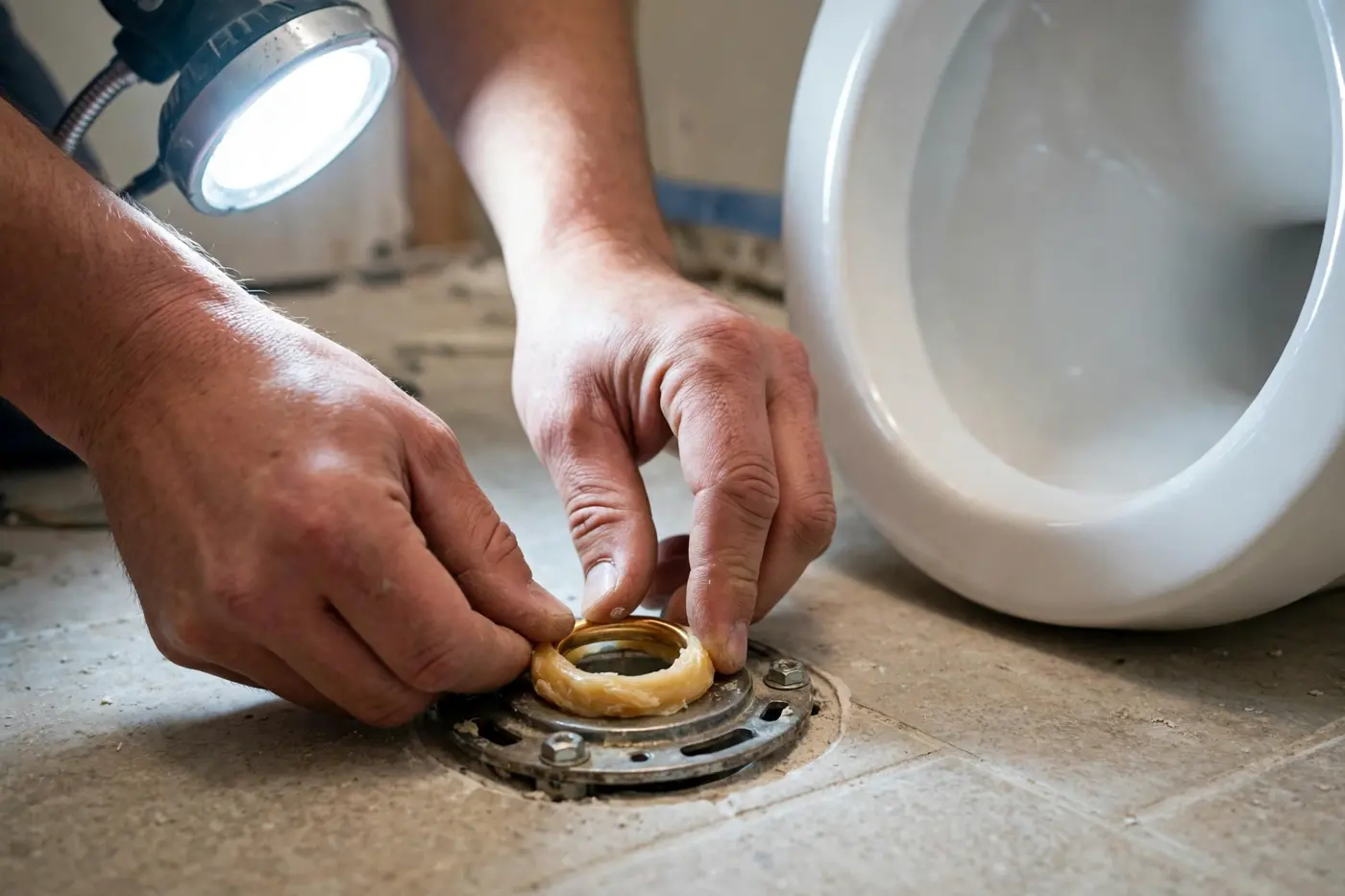
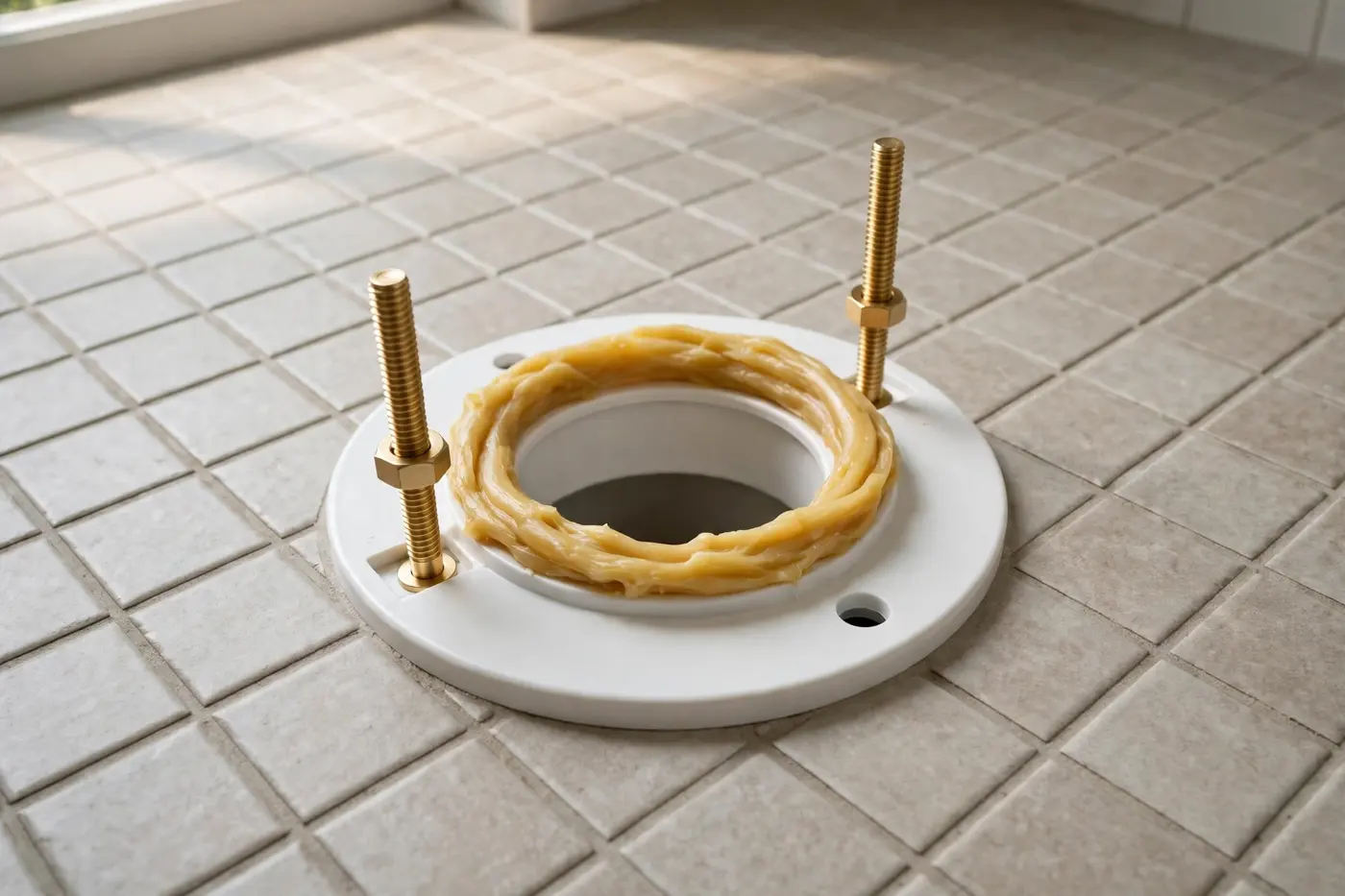
Under the bowl, the bowl outlet sits over the flange in the floor, and the wax ring seals the joint. The closet bolts pass through the flange slots and the bowl base, drawing the two together with the wax compressed between them. That joint has no tolerance for motion. Rocking works the wax loose, and once the seal breaks, each flush pushes a little water sideways under the bowl. The water feeds the subfloor, the subfloor softens, the rocking increases, and the cycle feeds itself. It is also how a rocking toilet and a sewer smell end up being the same problem from two directions — our wax ring replacement service page explains the reset in full, and flange repair covers what happens when the flange itself is cracked, corroded, or set at the wrong height.
Stop point: a bolt that spins, water or smell at the base, a soft floor, or rocking that survives careful bolt and shim work all mean the toilet must come up. Lifting a toilet, renewing the seal, and checking the flange and floor is the technician's reset visit — and it protects the floor, which is the part of this job that gets truly expensive when it is ignored. See areas we serve for coverage.
After the fix: how to keep the base steady
Once a toilet sits firm — whether by bolt adjustment, shims, or a full reset on a new seal — a few habits protect it. Do not use the toilet as a step to reach a high shelf or change a bulb; side loads at height are exactly the force the base joint handles worst. When you clean, avoid soaking the base line repeatedly with mop water, which works at the caulk edge and the flooring beneath over time. And recheck the bolt caps twice a year: a cap that has popped up on its own can be the first visible sign that a nut below it has started to back off again.
If the toilet was reset on a new seal, give it a full day of normal household use and then one deliberate check: sit, shift your weight in each direction, and press a dry tissue along the base seam after a flush. Firm, dry, and silent is the result you want. Any return of movement in that first week is worth a call while the visit is fresh, because a bowl that will not settle usually points to flange height — something far simpler to correct during a follow-up than after months of renewed flexing have worn the new seal.
Questions about fixing a wobbly toilet
Why does my toilet rock when I sit on it?
Rocking means the base is not sitting flat and firm on the floor. Common causes are loose closet bolts, an uneven floor, a flange that sits too high or too low, or a floor that has softened from moisture. Each flush on a rocking toilet flexes the base seal, so the cause matters more than the motion itself.
Can I fix a wobbly toilet by tightening the base bolts?
Only if the bolts are genuinely a little loose and the floor and flange are sound. Tighten each side a small turn at a time and stop as soon as the movement eases. Cranking the bolts down on a toilet that rocks because of an uneven floor or a high flange can crack the porcelain base, which turns a small job into a toilet replacement.
Do shims fix a wobbly toilet safely?
Shims help when the floor is slightly uneven and the flange and seal are in good shape. Plastic toilet shims slide under the base edge at the low side until the rocking stops, then the bolts are snugged and the excess shim is trimmed. Shims do not fix a broken flange or a failed seal, and a toilet that still smells or shows water at the base needs the base lifted and inspected.
Why is there water at the base of my wobbly toilet?
Water at the base of a rocking toilet usually means the seal between the bowl and the flange has been flexed open. Each rock pumps a little water past the seal during a flush. That water also soaks the floor under the bowl, which softens it and makes the rocking worse. The toilet needs to come up so the seal and flange can be checked.
When does a wobbly toilet need flange repair or a new wax ring?
Call when rocking continues after a careful bolt check, when you see water or smell sewer gas at the base, or when a bolt spins without tightening because its flange slot is broken. A technician lifts the toilet, checks the flange height and condition and the floor beneath, fits a new seal, and the scope is confirmed with you before any work starts.