TL;DR
Problem: A sewer smell hangs around your toilet even after cleaning, strongest near the floor.
Solution: Pinpoint where the smell is strongest, check bowl water level and base stability, and clean the surface sources first. A smell at the base line with any rocking usually means the under-base seal has failed.
When to call: Call a local specialist if the smell is strongest at the base, the toilet rocks, or more than one bathroom smells. Call (714) 410-0362 during open hours.
In this guide
Few household smells are as stubborn — or as telling — as sewer gas around a toilet. It tends to survive cleaning, drift in and out, and get blamed on everything from the drain to the neighbors. The useful fact is this: a toilet has two barriers against drain gas. The water standing in the bowl is the first, a trap that gas cannot pass. The seal under the base, where the bowl meets the floor flange, is the second. When a sewer smell centers on the toilet itself, one of those two barriers is weak, and finding which one is a short, orderly process.
This guide walks through that process: how to locate the smell with your nose as the instrument, the checks for bowl water level and base stability, the surface sources to rule out, and the point where the toilet needs to come up so the seal and flange can be renewed. In Fountain Valley's older housing stock, where many bathrooms still run on original flanges, the base seal is the cause we would check first — but the checks below will confirm it rather than assume it.
Step one: locate the smell precisely
Before cleaning anything, find where the smell is strongest. Get down low and check three zones in order: right at the base where the bowl meets the floor, at the bowl water itself, and around the tank and wall behind the toilet. A smell that peaks at the floor line points under the base. A smell that peaks over the bowl water points to the trap or to buildup in the rim passage. A smell that is even everywhere in the room, or also present at a sink or tub in the same bathroom, points wider — possibly to another fixture's trap or to venting — and that distinction saves a lot of wrong work.
Note timing too. A smell that appears after other fixtures run, or on windy days, suggests pressure changes in the drain system pushing gas past a weak seal. A smell in a bathroom that sits unused for weeks suggests evaporation in the bowl or a nearby trap. Write down what you notice; those details are exactly what a technician will ask about, and they shorten the visit.
Step-by-step checks for a sewer smell around a toilet
Check the bowl water level
Look at the bowl at rest. The water should sit at its normal level, matching the faint waterline stain that marks where it usually stands. A low bowl means a weak trap. Flush and watch the end of the cycle: the refill tube should send water down the overflow tube to top the bowl back up. If the bowl ends low, check the tank water level and the refill tube position, following the float checks in our tank fill guide.
Test the base for rocking
Sit on the closed lid and shift your weight. Any rocking at all matters here, because a moving base works the under-base seal open — smell and motion are the classic pair. Even a slight give, combined with a floor-line smell, is enough to suspect the seal. Our wobbly toilet guide explains why that motion breaks the seal down over time.
Inspect the base seam for moisture and staining
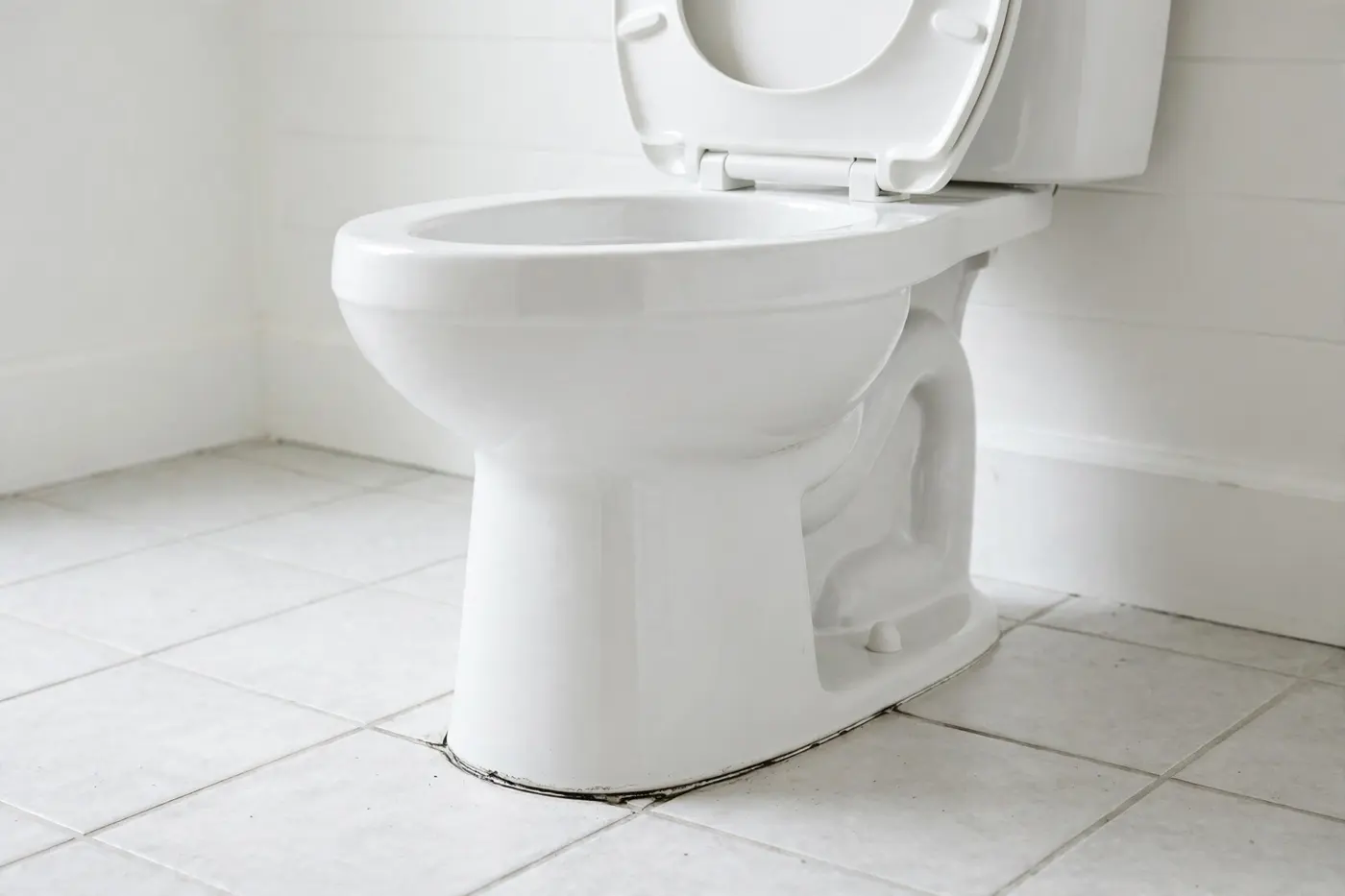
Dry the floor around the base, flush twice, and press a dry tissue along the base seam. Moisture, a dark stain line in grout or vinyl at the base, or soft flooring near the bowl all support the same conclusion: the joint under the toilet is open, passing gas and likely a little water as well. Take a photo for reference before anything is cleaned up.
Clean and rule out the surface sources
Scrub under the bowl rim with a brush, clean around the base bolt caps and the hinge area of the seat, and wipe the floor line. Organic buildup in those spots can smell surprisingly strong and is often mistaken for drain gas. Give the room a few hours after cleaning. A surface smell fades and stays gone; a seal smell returns at the same strength, unchanged by cleaning.
Check the other fixtures in the room
Run water in the sink and tub for a minute each. Traps in unused fixtures dry out just like a bowl can, and a dry sink trap will perfume a whole bathroom in a way that gets blamed on the toilet. If the smell drops after running those fixtures, you have found a contributor. If nothing changes and the smell still peaks at the toilet base, the base seal is where the evidence points.
The base seal: the most common cause
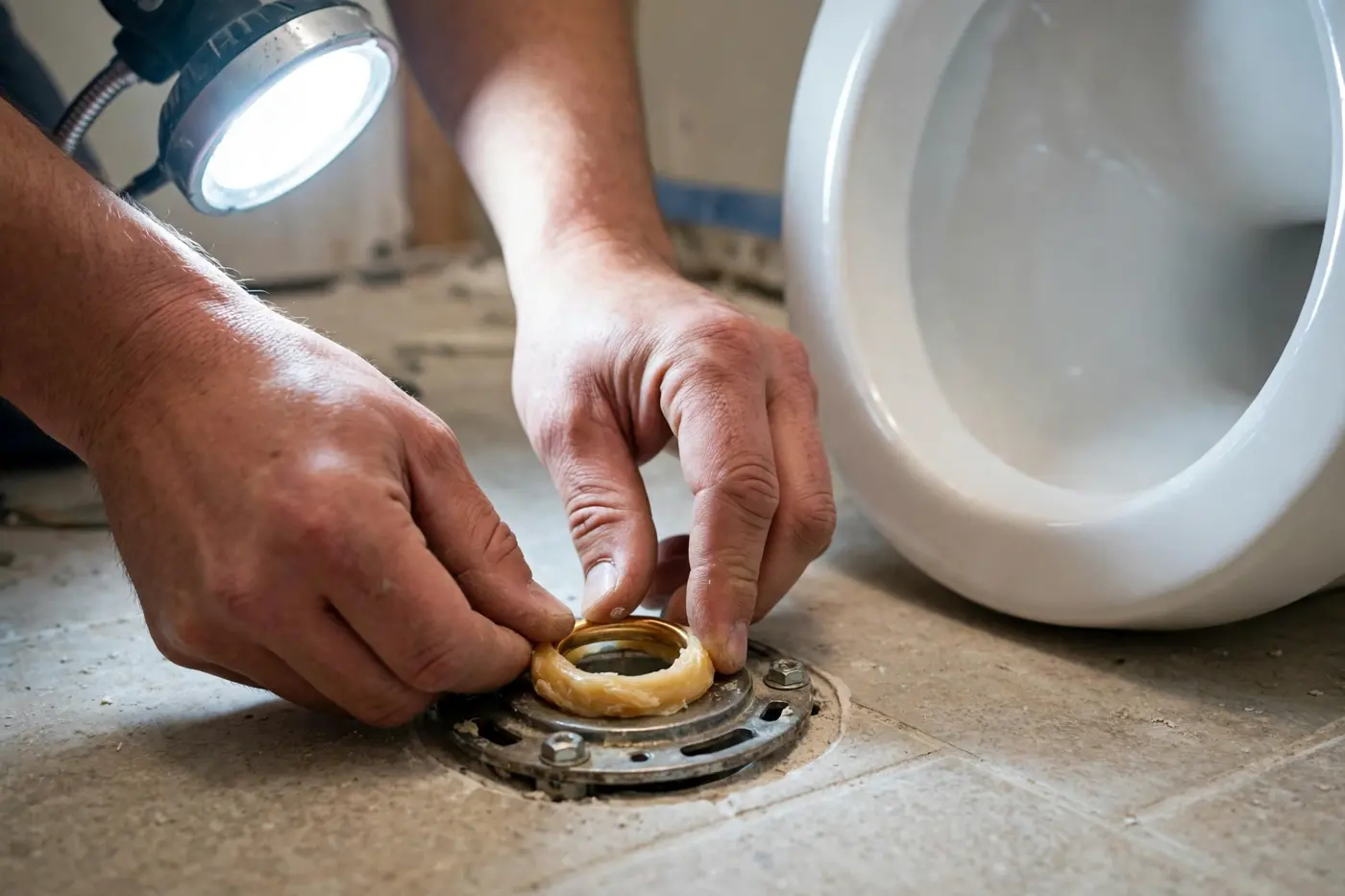
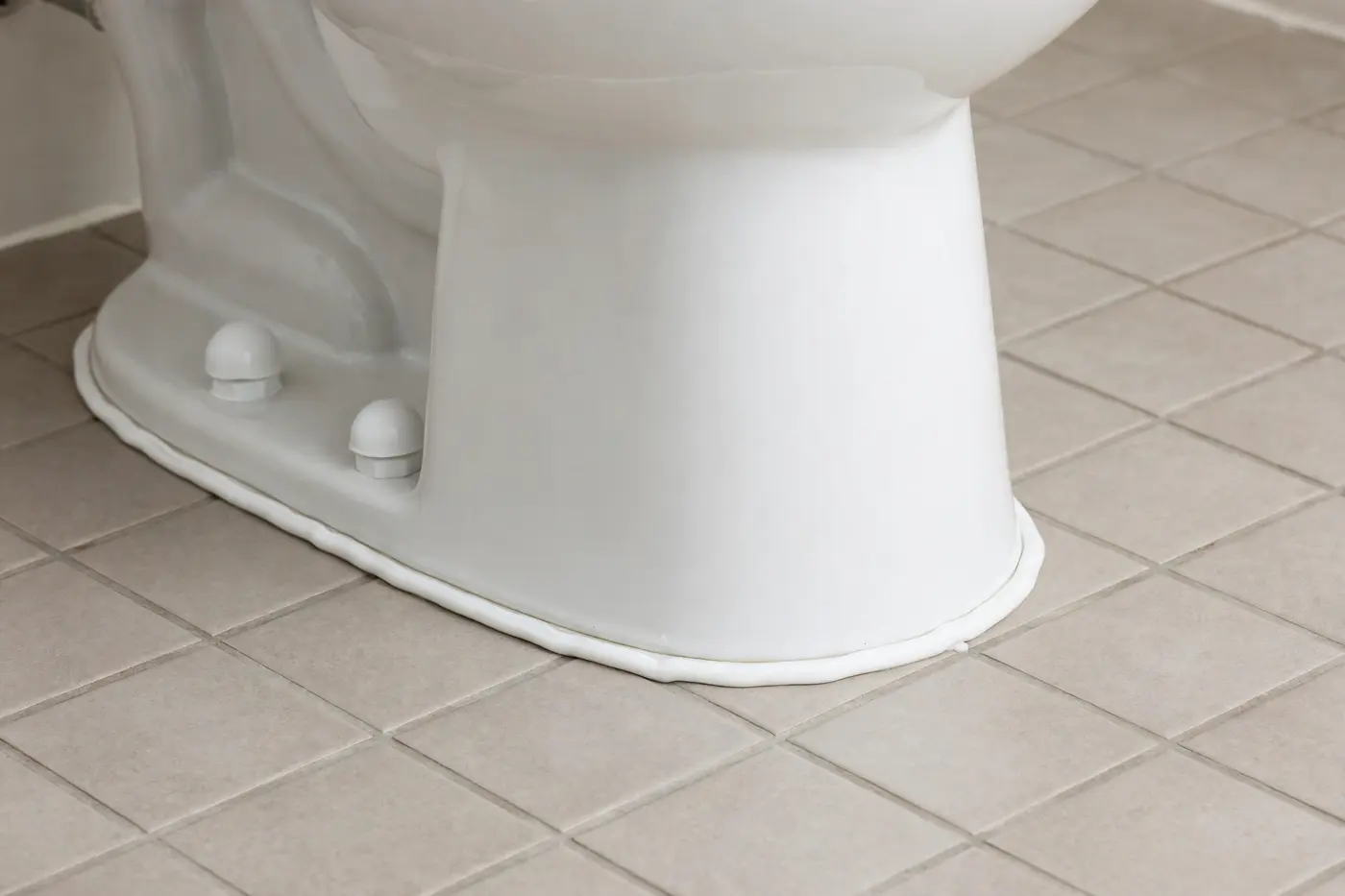
Under the bowl sits a wax ring, compressed between the bowl outlet and the floor flange. It is a simple, effective seal — as long as nothing moves. Age hardens it, rocking crushes it unevenly, and a flange set too low leaves it stretched thin from the day it was fitted. Once a channel opens in that wax, drain gas has a straight path into the room around the base, and no amount of cleaning above the floor reaches it. The fix is a reset: water off, toilet lifted, old wax fully removed, flange inspected for cracks, corrosion and height, floor checked for moisture damage, a new seal fitted, and the bowl set back down evenly and tested. That is the work described on our wax ring replacement page, and it is also why a smell at the base should not be sealed over with caulk — caulk hides the symptom, traps leaking water under the bowl, and leaves the open gas path exactly as it was.
Other sources that mimic a toilet smell
Three more sources deserve a mention so they are not missed. First, buildup inside the rim jets and rim channel of the bowl can hold odor right at the bowl; a brush worked into the jet holes and a thorough bowl clean address it. Second, a crack in the bowl itself — rare, but possible in older porcelain — can weep water and odor from a place no seal reaches; staining that reappears on the porcelain itself is the clue. Third, venting: the drain system breathes through a roof vent, and a blocked vent can let pressure push gas past traps and weak seals at several fixtures at once. Smell in multiple bathrooms, or gurgling alongside the smell, moves venting up the list.
Stop point: if the smell is strongest at the base, travels with rocking, or comes with moisture at the floor, the toilet needs to come up — surface fixes will not reach the cause. If several bathrooms smell, say so when you call, because that changes what the technician checks first. Coverage is listed on the areas we serve page.
Keeping the smell from coming back
After the cause is fixed, prevention is mostly about water and stillness. Keep every toilet in the house flushed at least once a week, including guest bathrooms, so bowl traps stay full and fresh. Do the same for seldom-used sinks and tubs — one minute of tap water a week keeps their traps sealed too. If you will be away from home for several weeks, ask someone stopping by to flush each toilet mid-absence; evaporation is slow, but a month of still air in a warm house can lower a bowl enough to matter.
Protect the base seal you have. A toilet that sits firm keeps its seal; a toilet that starts to rock spends it. If you ever notice new movement at the base, treat it as an early warning rather than a nuisance and deal with it while the fix is still small — the wobbly toilet guide covers the safe checks. And keep the floor line around the base dry during cleaning: repeated soaking at the seam works moisture toward the flange area over the years, and the flange and floor do their work properly when they stay dry from above and sealed from below.
Finally, trust the pattern of any returning smell. A smell that returns at the base after a reset, or one that spreads to a second bathroom, is new information, not a failed visit — it points deeper, toward flange height, the floor beneath, or venting, and it is worth reporting exactly when and where you notice it. Notes on timing, weather, and which fixtures were running are genuinely useful to the technician, because drain systems behave differently under load than at rest, and your observations capture the system under load in a way a single visit cannot.
Questions about a sewer smell around a toilet
What is the most common cause of a sewer smell around a toilet?
The most common cause is a failed seal under the base — usually the wax ring — which lets sewer gas escape around the flange instead of passing down the drain. It often follows rocking at the base or shows up with a stain or moisture at the floor line. The toilet has to come up so the seal and flange can be inspected and renewed.
Can a sewer smell around a toilet come from the bowl water level?
Yes. The water standing in the bowl is the trap that blocks drain gas. If the bowl level is low because the tank water level is set too low or the refill tube is not topping the bowl up after each flush, gas can pass through. Check that the tank fills to its waterline and that the refill tube points down the overflow tube.
Why does the sewer smell around my toilet come and go?
A smell that comes and goes often tracks use and weather. A guest bathroom toilet that sits unused can lose bowl water to evaporation until the trap weakens. Wind over the roof vent and large drain flows elsewhere in the house can also pull or push gas past a weak base seal, so the smell appears on some days and not others.
Is a sewer smell around a toilet something I can fix with cleaning?
Cleaning fixes surface causes — buildup under the rim, around the base bolts, or in an overflow area of a nearby sink. If the smell stays after a thorough clean, is strongest at the floor line, or comes with rocking or moisture at the base, the source is under the toilet rather than on it, and cleaning products will only mask it for a short time.
When should I call about a sewer smell around my toilet?
Call when the smell points to the base, when the toilet rocks, when you see moisture or staining at the floor, or when the smell affects more than one bathroom, which can point to venting or a wider drain issue. A technician checks the base seal, flange and bowl water level first, and the scope is confirmed with you before any work starts.