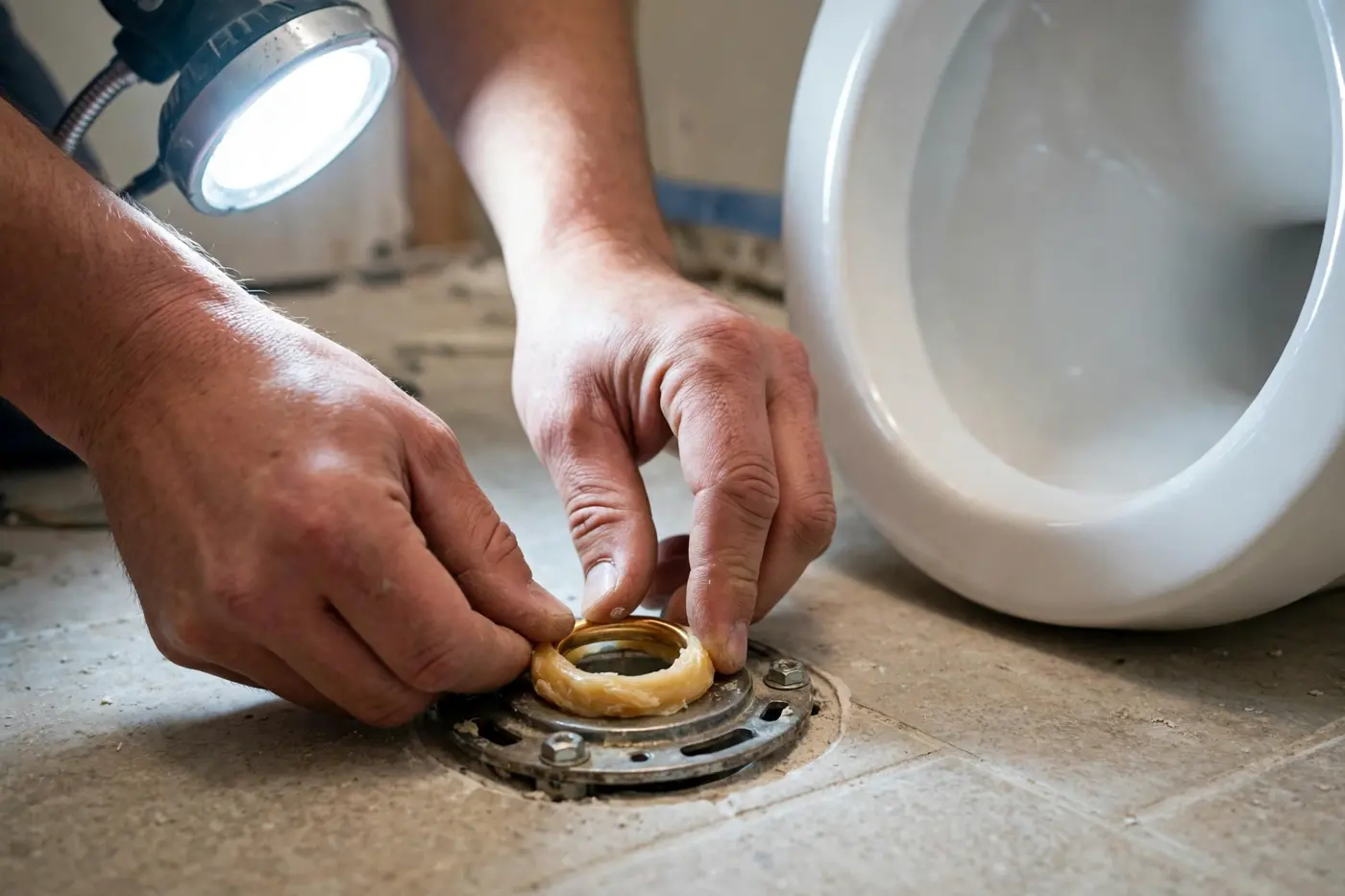
Wax Ring Replacement in Fountain Valley, CA
Water at the base or a sewer smell near the toilet often means the wax seal under the bowl has failed — one call connects you with a local toilet specialist who lifts, reseals, and resets the toilet.
📞 Call Now — (714) 410-0362Signs the ring under your toilet is no longer sealing
The wax ring sits hidden between the bottom of the toilet and the floor flange. You cannot see it, but a failing ring announces itself in ways that are hard to miss once you know them.
Water at the base
A damp ring or small puddle around the foot of the toilet after flushing.
See the fix →Sewer smell near the toilet
A drain smell that stays after cleaning and centers on the base of the bowl.
See the fix →Toilet rocks or shifts
Movement at the base breaks the wax and opens the seal a little more each week.
See the fix →Stained or soft flooring
Dark marks, lifted vinyl, or a soft spot in the floor beside the base.
See the fix →Ceiling stain below
In two-story homes, a slow base leak can mark the ceiling of the room below.
See the fix →Loose base bolts
Bolt caps pop off and the nuts no longer hold the bowl firm to the floor.
See the fix →Not every wet base is a wax ring. Water can also come from the tank bolts, the fill line connection, or condensation in warm weather. That is why diagnosis comes before the lift. A technician traces where the water first appears — high at the tank, at the supply joint, or low at the floor line — because each source has a different fix. Water that shows only at the floor, paired with smell, points under the toilet. Water that runs down the back of the tank points to toilet leak repair at the tank instead.
Left alone, a failed ring does quiet damage. Each flush sends a small amount of water under the bowl and into the floor build-up. On a slab home that water spreads under tile or vinyl. In a raised-floor home it can soften the wood around the flange. Early action keeps the job to a ring and a reset; waiting can turn it into floor and flange work as well.
From damp base and drain smell to a sealed, solid reset
The left side is the call we hear most: a damp base and a smell that cleaning never clears. The right side is a toilet reset on a fresh ring, sitting solid and dry.
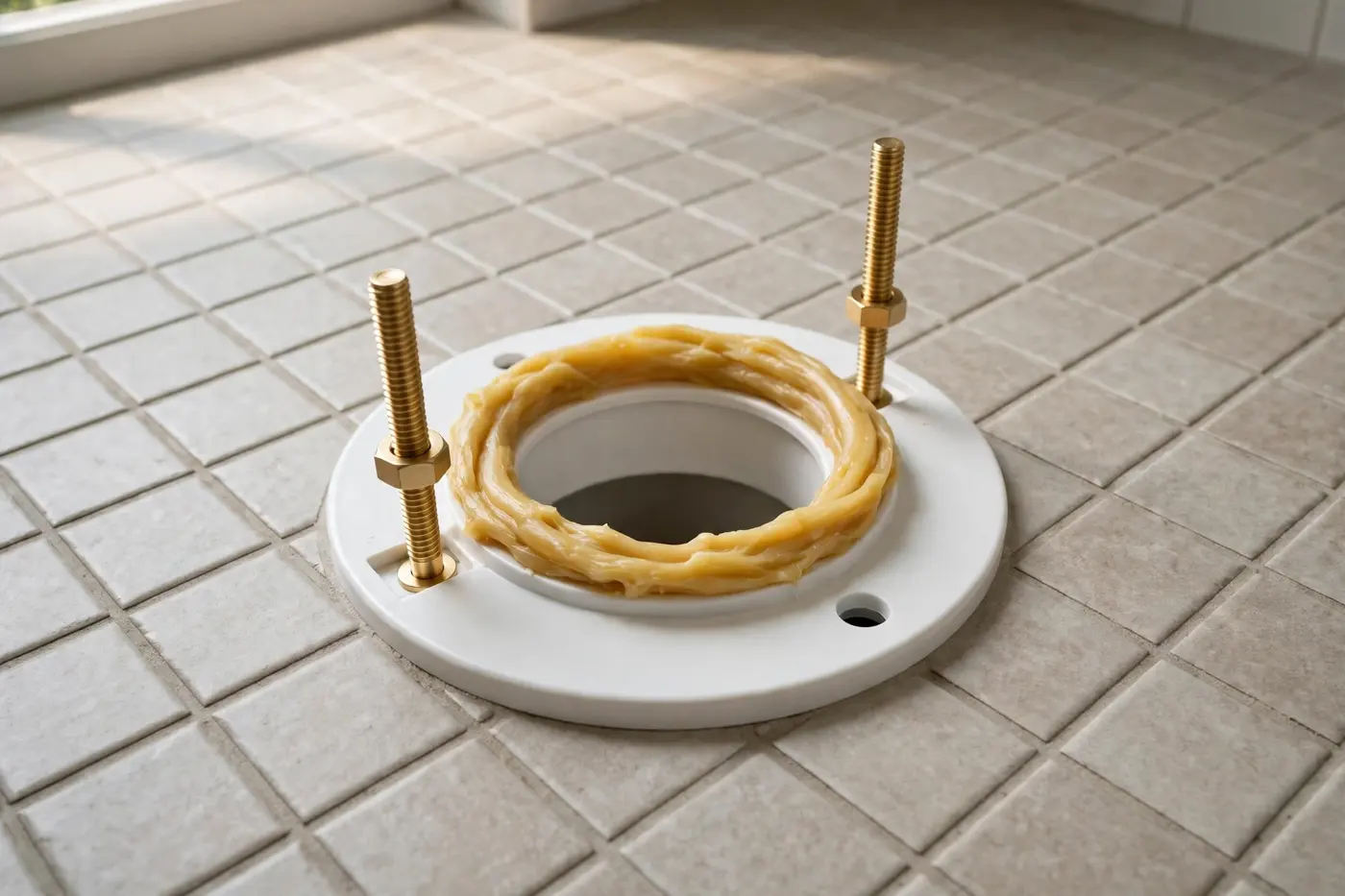
Old wax squashed flat and split by years of slight movement, letting flush water seep out and drain smell seep in at the base.
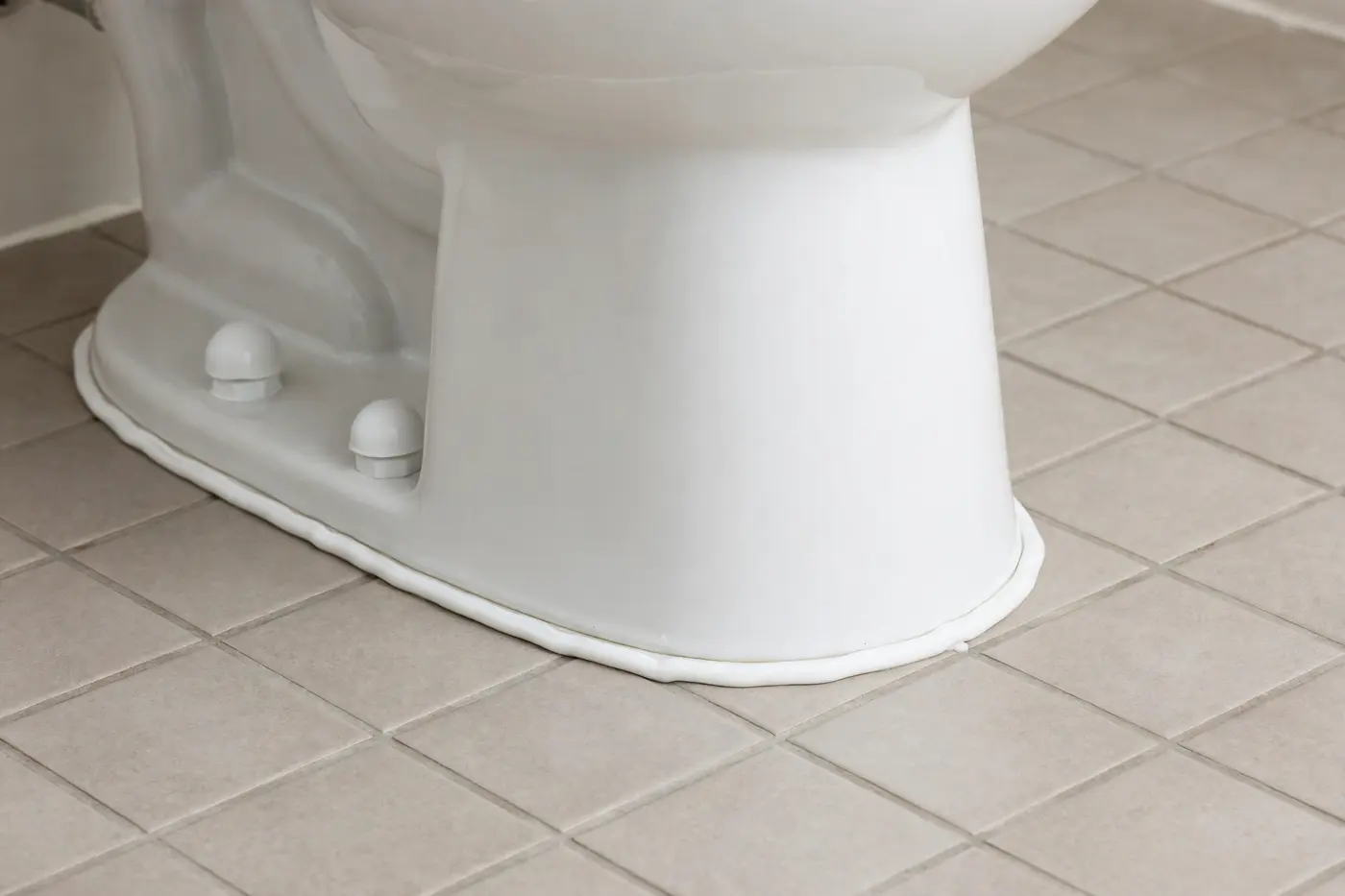
Old wax fully removed, flange checked and leveled, new ring set, toilet lowered straight and secured, then flushed again and again while the base is checked dry.
The reset is the skilled part. The toilet must come down level, in one straight motion, centered on the flange, so the fresh ring compresses evenly all the way around. A crooked set squashes one side thin and leaves the other side open. That is why the bowl is guided onto new bolts by hand, checked for level front to back and side to side, and only then secured down.
The reset procedure, step by step
A wax ring job is a full toilet lift and reset. Each step protects the porcelain, the flange, and the floor.
Shut off water and drain the toilet
The supply valve is closed, the toilet is flushed to empty the tank, and remaining water is sponged from the tank and bowl. The supply line is then undone at the tank. A dry, light toilet is safer to lift and keeps water off your floor.
Unbolt and lift the toilet clear
Base bolt caps are removed, the nuts are backed off, and the toilet is rocked very gently to break the old seal, then lifted straight up and set on a protected surface. The drain opening is covered right away to block smell while work goes on.
Remove every trace of old wax
Old wax is scraped from the flange face and from the horn under the bowl. Leftover wax stops the new ring from seating flat, so this step is done with care. The waste is bagged and removed, not pushed into the drain.
Check the flange and the floor
The flange is checked for cracks, rust, and height against the finished floor. The floor around it is checked for soft spots or water damage. A flange that sits too low, too high, or broken must be sorted now — while the toilet is off — or the new ring will fail early. See flange repair for how that work is handled.
Set the new ring and reset the toilet
A fresh wax or silicone ring is set on the flange or the bowl horn, new bolts are placed, and the toilet is lowered straight down in one motion, guided onto the bolts. Body weight settles the ring evenly. The bowl is checked for level and for any rock before the nuts are snugged down in turns.
Reconnect, flush, and check dry
The supply line is reconnected, water is turned on, and the tank fills. The toilet is flushed several times while the technician watches and feels around the base for any dampness. The base edge is finished neatly, bolt caps go on, and the floor is left clean.
Checks you can do before you call
These checks help you describe the problem and rule out simpler sources of water.
- Dry the base fully, then flush twice and watch where water first appears.
- Run a dry tissue around the supply line joint and under the tank to check for drips from above.
- Press gently at the side of the bowl to feel for rock or shift.
- Note whether the smell is strongest at the base or higher near the tank.
- Check the floor beside the base for soft spots, lifting vinyl, or dark grout lines.
Stop point: do not keep flushing a toilet that leaks at the base to test it, and do not just add a thick bead of sealant around the foot of the bowl. Sealant traps leaking water under the toilet where it keeps damaging the floor, and it hides the warning sign. The seal that matters is under the bowl, at the flange.
What breaks a wax seal over time
Wax does not wear out on a schedule; it fails when it is disturbed or squeezed unevenly. Movement is the main cause — a toilet that rocks even slightly works the wax with every use until a channel opens. A flange set below floor level leaves the ring stretched thin. A flange set too high can stop the bowl from sitting flat. New flooring laid around a toilet without raising the flange is a common hidden cause in remodeled Fountain Valley bathrooms.
Heat can soften wax in rare cases, and age makes it dry and less able to reseal after any shift. Once a channel opens, water and smell follow the same path, which is why the two signs so often arrive together. A correct reset fixes the cause — level flange, solid bolts, steady bowl — and not only the ring, so the new seal is given a fair chance to last.
If the toilet also has a cracked base or a bowl that is stained through and tired, the technician may suggest looking at toilet replacement while the old unit is already off the floor. That call is always yours, and the ring work is explained on its own first.
Leak at the base, sewer smell, and wax vs silicone rings
Two signs bring most people to this page: water where it should not be, and a smell that will not leave. They share one hidden cause more often than any other — the seal at the floor flange.
Why a leak at the base and a sewer smell arrive together
The wax ring does two jobs at once. It seals water flowing down into the drain, and it seals drain gas from rising into the room. When the ring is whole, neither escapes. When it cracks, flattens, or pulls away on one side, the same opening serves both: flush water seeps out under the bowl, and gas drifts up around the base. That is why scrubbing the bowl and tank never clears the smell — the source sits under the toilet, out of reach of any cleaner.
The water side of the failure is often slow. A small seep per flush can run for months before a puddle shows, because much of the water spreads under flooring instead of across it. By the time a stain or soft spot appears, the floor build-up may already be damp. Early signs — a faint smell on warm days, grout darkening near the base, a toilet that has begun to rock — are the right moment to act, while the job is still a ring, a reset, and a flange check. Our guide on sewer smell around a toilet walks through the other possible sources, such as a dry trap elsewhere in the room, so you can narrow the cause before you call.
Flange height: the quiet deciding factor
A flange should sit level with, or just above, the finished floor. In many Fountain Valley homes the original flange was set for the original floor. New tile or vinyl laid over the old surface raises the floor around a flange that stayed put, leaving the ring to bridge a gap it was not shaped for. Stacking two thin rings is a short-lived patch; the correct move is a flange extender or a flange repair that restores proper height, then a standard ring. The technician measures this with the toilet off and explains the finding before the reset, because this single detail decides how long the new seal holds.
Wax vs silicone: an honest comparison
Wax is the long-used material for this seal. It is soft at room temperature, compresses into every small uneven spot between bowl and flange, and stays sealed as long as the toilet does not move. It is a one-set material: if the toilet is lifted or set crooked, the wax does not spring back, and a fresh ring is needed.
Silicone and rubber-style rings take a different approach. They compress with a gasket action and can be repositioned during the set, which helps when a heavy toilet needs a second try at alignment. They also tolerate a later lift — for floor work, for example — without a new ring each time. Their fit depends more on correct flange height, and the part itself is more involved than a wax ring. Neither material fixes a broken flange or a rocking toilet; both need a sound, level base. During your visit, the technician checks your flange height and floor and talks through which ring suits your setup, then sets the one you choose.
Wax ring
- Forms itself to the flange and bowl horn as it compresses
- Long-used, proven seal for standard flange heights
- One-set material — a lifted toilet needs a fresh ring
- Unaffected by normal bathroom cleaning products
Silicone ring
- Gasket-style seal that can be repositioned during setting
- Can stay in place if the toilet is lifted again later
- Depends on correct flange height for a full seal
- Useful where future floor or flange work is planned
Whichever ring goes in, the finish is the same test: repeated flushes, a dry tissue check around the full base, and a bowl that does not move under a firm side press. If the base cannot be made solid because the flange or floor has failed, the technician will show you exactly what was found and outline the added work before anything else proceeds — no surprises after the toilet is back down.
Base seal work connects to these services
A ring job often touches the flange, the supply line, or the toilet itself. These pages explain each connected service, and areas we serve shows where we work.
Flange Repair
Cracked, rusted, or low flanges repaired or replaced at the floor.
View service →Toilet Leak Repair
Leaks traced at the tank, bowl, base, or supply line.
View service →Supply Line & Valve
Aging supply lines and stiff shut-off valves replaced.
View service →Toilet Installation
New toilets set on a fresh ring and tested from the first flush.
View service →Wax ring replacement questions
What are the signs I need a wax ring replacement in Fountain Valley?
Water pooling at the base after a flush, a sewer smell near the toilet that cleaning does not remove, a toilet that rocks, and soft or stained flooring around the base all point to the seal under the toilet. The technician lifts the toilet to confirm the ring and flange condition before fitting a new seal.
Can a wax ring replacement stop a sewer smell in my bathroom?
If the smell comes from a broken seal at the base, yes. The wax ring seals both water and drain gas at the floor flange, so a failed ring lets smell into the room. During a wax ring replacement the old ring is fully removed, the flange is checked, and the toilet is reset on a fresh seal and tested.
Wax or silicone: which ring is right for my wax ring replacement?
Wax forms a proven seal and suits most standard flanges. Silicone rings can be repositioned during setting and hold up well where a toilet may be lifted again. The technician checks flange height against your finished floor and talks through which ring suits your setup before the reset.
What happens during a wax ring replacement and toilet reset visit?
Water is shut off, the tank and bowl are drained, and the toilet is unbolted and lifted clear. The old wax is scraped from the flange and bowl horn, the flange and floor are checked, and a new ring is set. The toilet is lowered straight onto the bolts, secured, reconnected, and flushed several times while the base is checked dry.
My toilet rocks — does that mean I need a wax ring replacement?
Rocking often breaks the wax seal even if the ring was sound, because movement cracks the wax and opens a path for water and smell. The cause of the rock matters: it can be an uneven floor, loose bolts, or a damaged flange. The technician finds the cause first, fixes that, then completes the wax ring replacement so the new seal lasts.
How soon can I use the toilet after a wax ring replacement in Fountain Valley?
Once the reset is done, the toilet is flushed and checked during the same visit, and normal use can resume right after that testing. The base seal line is finished and the area is left clean. The technician will tell you if the flange or floor needed extra work that changes that timing.
Base leak or sewer smell that will not clear?
Call during open hours — Mon–Fri 7:00 AM–10:00 PM, Sat 8:00 AM–10:00 PM, Sun 7:00 AM–9:00 PM — and we will connect you with a local toilet specialist for a ring replacement and reset.
📞 Call Now — (714) 410-0362 Prefer email? [email protected]