Toilet Leak Repair in Fountain Valley, CA
📞 Call Now — (714) 410-0362A toilet leak is fixed by tracing the water to its true source — tank, bowl, base, or supply line — and repairing that seal or part, then testing every connection dry.
Leaks hide — these signs give them away
Water on the bathroom floor gets blamed on the nearest seal, but a toilet can leak from at least six places, and each one has a different fix. Leak detection comes first: finding the true source is the whole job.
Some leaks announce themselves: a puddle at the base, a drip you can hear, a supply line spraying a fine mist. Others hide for weeks. A slow leak inside the wall side of the base, or a tank that sweats and drips only when it refills, can soak the floor under the tile long before a single drop shows on top.
Signs worth acting on:
- Water pooling or seeping around the base of the toilet
- A musty smell in the bathroom that cleaning does not remove
- Floor that feels soft, spongy, or springy near the toilet
- Tile grout or vinyl edges darkening around the base
- Drips from the tank bolts or the supply connection
- The toilet rocks or shifts slightly when you sit down
That last sign matters more than people think. A toilet that rocks is working its wax seal back and forth with every use. The seal was made to sit still and stay compressed. Rocking breaks it down, and one day the leak at the base starts — often with sewer smell arriving at the same time, because the same seal that holds water in also holds drain gas out.
Not all bathroom water comes from the toilet at all. A tub with a tired caulk line, a shower door that leaks at the corner, or plain condensation on a cold tank can all leave water near the toilet. In humid weather, a tank filled with cold water sweats on the outside and drips steadily onto the floor, looking exactly like a leak. It is not one — and fixing a seal will not stop it.
This is why guessing wastes time and parts. The dry-and-test method is simple and it works: dry the entire toilet and floor, then flush and watch. The first place that gets wet again is the source. Everything else is a symptom of water traveling downhill.
If the floor already feels soft near the base, treat the leak as a priority. The toilet sits on the subfloor, and that wood soaks quietly. The leak itself is usually a small repair — the floor damage from waiting is not. Shut the water off at the valve behind the toilet if the leak is steady, and call during open hours.

From a seeping base to a dry, solid seal
A fixed leak is proven the plain way: the toilet is flushed again and again under a watchful eye, and every point that was wet stays dry.
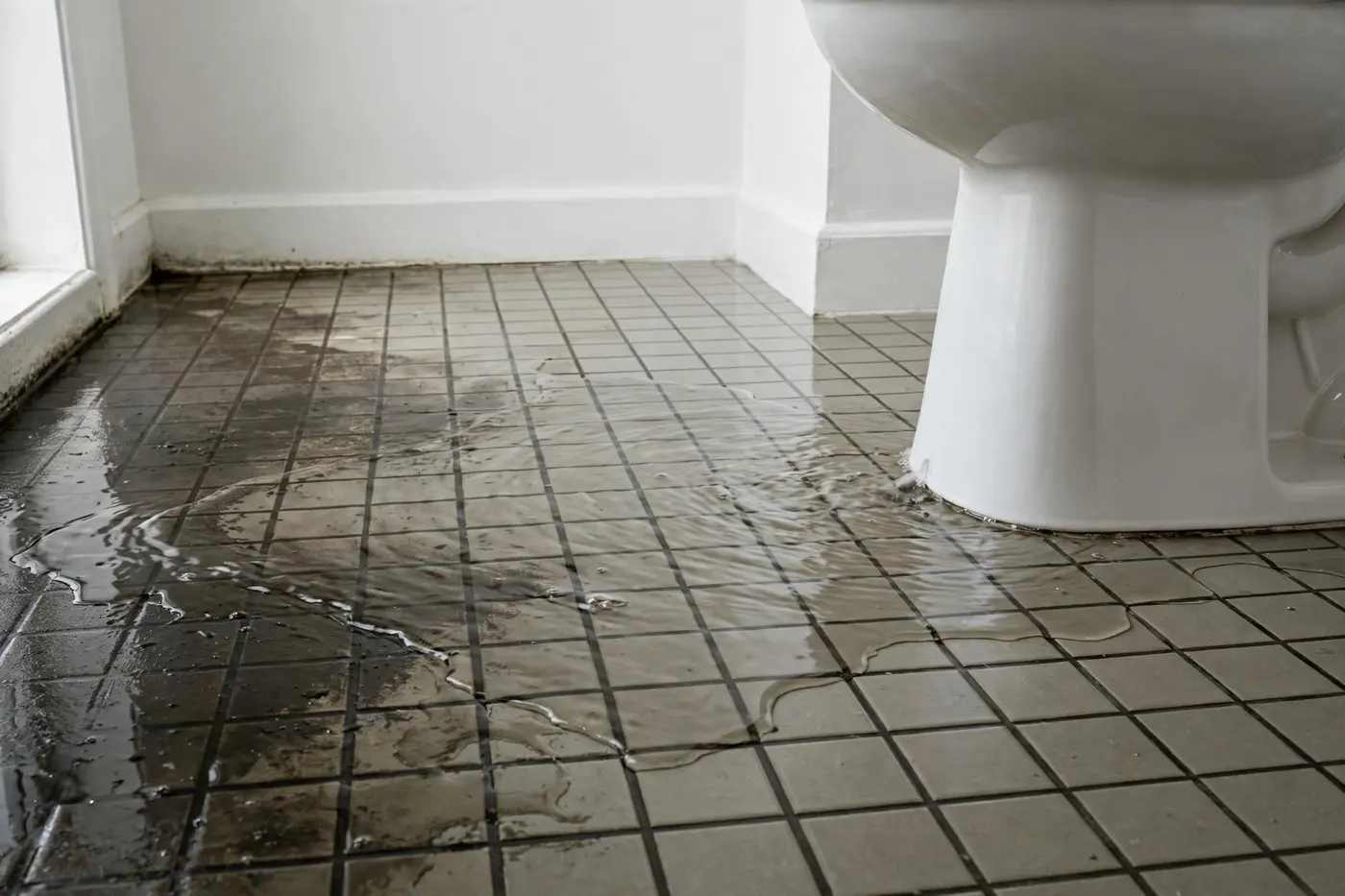
Water seeps out at the base with each flush and the floor around the toilet stays damp. The old seal under the toilet has failed, and every flush pushes a little more water under the flooring where it cannot dry.
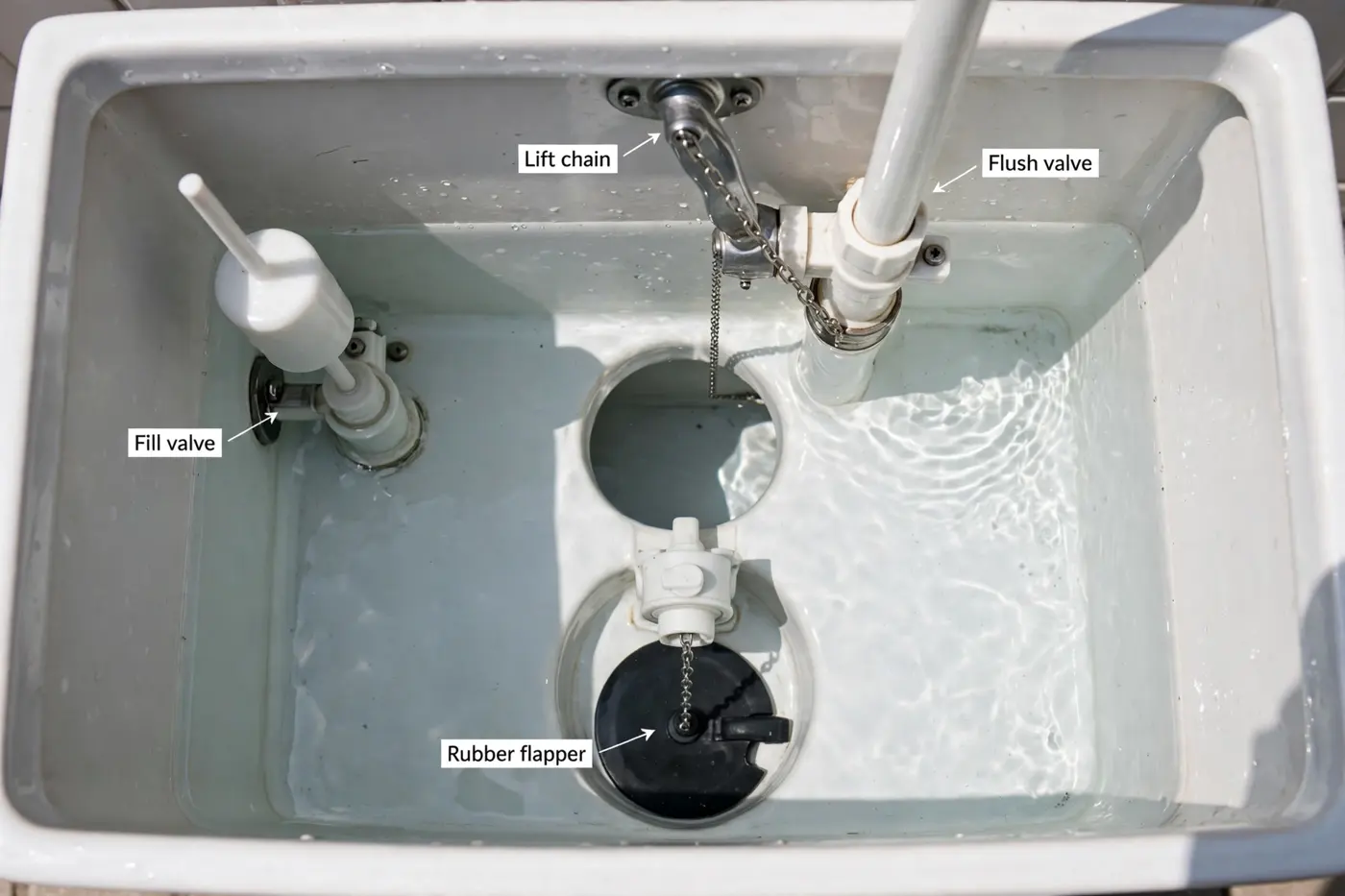
The failed seal or part is replaced, the flange and floor are checked while the toilet is lifted, and the toilet is reset solid with no rock. Repeat flushes leave the base, the bolts, and the supply connection dry to the touch.
Lifting the toilet is also a fact-finding step. With the toilet off, the flange, the seal surface, and the floor around the drain are all visible. Damage that was hidden — a cracked flange, a soft ring of subfloor — can be dealt with in the same visit instead of being sealed back under the toilet to leak again.
How a toilet leak repair visit works
One call connects you with a local toilet specialist. Here is the visit, step by step.
Step 1 — The call and what to describe
You call (714) 410-0362 during open hours and describe where the water shows up: at the base, under the tank, at the wall valve, or in the ceiling below. If you can, say when it appears — only when flushing, only when the tank refills, or all the time. That timing narrows the source list before the visit even starts.
Step 2 — Dry everything, then test
The technician dries the toilet, the floor, and every connection with towels, then flushes and watches with a light and a dry hand. Water is chased to its highest, earliest point, because water runs down — the wettest low point is rarely the source. Condensation is ruled in or out at this stage too.
Step 3 — Checking the usual suspects in order
The supply line and shut-off valve are checked first, then the tank-to-bowl bolts and gasket, then the fill valve connection, then the base seal. The scope of the repair is confirmed with you before any work starts, so you know which seal or part will be changed and why.
Step 4 — The repair itself
Supply and tank leaks are fixed at the connection: a new line, fresh washers, or a reset gasket. A base leak means lifting the toilet, removing the old wax, and checking the flange and floor before a new seal goes in. If the flange is cracked or sits too low, that is addressed while the toilet is off, not buried and forgotten.
Step 5 — Resetting solid, with no rock
The toilet goes back down level and firm. Any rock is corrected at the flange or floor, never by over-tightening the bolts, which can crack the porcelain base. A solid reset protects the new seal from the slow working-loose that caused many base leaks in the first place.
Step 6 — Flush testing and a final dry check
The toilet is flushed several times, including back-to-back flushes, while every repaired point is checked with a dry hand and a light. The technician also checks the floor around the base after the tests, not just during, because a slow seep takes a minute to show. The visit ends only when every point stays dry.
Safe checks you can do — and where to stop
You can find the source of many leaks yourself with a towel, a flashlight, and ten patient minutes. The fix is where the line sits.
Checks that are safe to try
- Dry the whole toilet, flush, and feel each connection to find the first wet point
- Wrap a dry tissue around the supply connection and check it after an hour — damp tissue means a slow drip
- Put a few drops of food coloring in the tank to separate tank leaks from base leaks
- Sit and shift your weight gently: any rock at the base is worth reporting on the call
- Check whether the water only appears on humid days — that pattern points to tank condensation
Tightening a visibly loose supply nut by hand, a small turn at a time, is a fair home check. Stop the moment it resists — those fittings seal with washers, not force, and over-tightening cracks them.
Where to stop and call
- Water comes from under the base when you flush — the toilet needs lifting, not tightening
- The floor near the toilet feels soft or the toilet rocks
- There is a sewer smell along with the water
- The shut-off valve will not stop the water, or the valve itself leaks
- You see a hairline crack in the tank or bowl, or water inside the wall or ceiling below
- The leak returns days after you tightened or dried things once
Do not caulk around the base to hide a leak. Caulk traps the water under the toilet where it soaks the floor in secret, and it hides the very sign you need to see. A dry base with open edges is honest — if the seal fails again, you will see it right away. Read more on the seal itself on our wax ring replacement page.
Steady leak right now? Turn the valve behind the toilet clockwise until the water stops, flush once to empty the tank, and dry the floor. That holds things safely until your call during open hours.
The leak map: four zones, four different fixes
Think of the toilet as four leak zones. Each zone has its own causes, its own fix, and its own risk if it is left alone.
Zone one — the supply side. Water enters through the shut-off valve at the wall and the supply line up to the tank. Leaks here drip steadily, flush or no flush, because this side is under pressure all the time. The causes are tired washers, a line that has aged stiff, or a valve that no longer closes fully. The fix is at the connection, and this zone is also where a small drip can turn into a spray if a tired line lets go — which is why supply drips should never be filed under ignore.
Zone two — the tank. The tank bolts and the large gasket between tank and bowl can weep, usually right after a flush when the tank is full and heavy with water. Tank leaks run down the back of the bowl and pool at the base, which is why they are so often mistaken for base seal failures. Drying the tank underside and watching one refill cycle separates the two. The fix is fresh bolt washers and a new gasket, with bolts snugged evenly so the tank sits level.
Zone three — the bowl. Porcelain cracks are the rare but serious zone. A hairline crack in the bowl or tank leaks slowly and steadily, and it cannot be sealed in any lasting way — cracked porcelain means the fixture itself is done. Cracks come from hard knocks, over-tightened bolts, or age in a heavily used bathroom. Any crack found during a visit changes the conversation from repair to toilet replacement, and the technician will show you the line so you can see why.
Zone four — the base. The wax seal between the toilet outlet and the floor flange keeps flush water in the drain and drain gas out of the room. When it fails, water appears at the base during flushes, often with smell. The fix is a lift, a new seal, and a check of the flange height and the floor. Base leaks carry the highest hidden-damage risk of the four zones, because the water goes under the flooring where air cannot dry it.
That drying problem is worse in slab homes, and Fountain Valley has many: neighborhoods built in the 1960s and 1970s often sit on concrete slabs with tile or vinyl laid over the bathroom floor. A base leak in a slab home pushes water along the slab under the tile, where it can travel surprising distances and feed dark grout lines rooms away from the toilet. The surface can look almost dry while the layer under the tile stays wet for weeks. Catching a base leak early in a slab home is the difference between a seal change and pulling up flooring.
Patch the part vs replace the toilet
Most leaks are a single failed seal or part, and those are honest repairs. Sometimes the fixture itself has reached the end, and one more patch is money spent twice. Here is the honest split.
Repair the Leak
- The leak traces to one seal, gasket, line, or valve
- The porcelain is sound, with no cracks anywhere
- The flange and floor under the toilet are solid
- The toilet flushes well and the tank parts are healthy
- The toilet sits solid, or the rock has a simple cause
- One visit, one failed part, tested dry at the end
Replace the Toilet
- A crack in the tank or bowl is the leak source
- The flange is broken and the floor ring is rotted
- The same toilet has leaked from several points lately
- The toilet also clogs weekly and flushes weakly
- Parts for an old, worn fixture are getting hard to match
- See how a swap works on the toilet replacement page
Either way, the decision is made from what the dry-and-test check actually finds — not from the puddle alone. A base puddle with a sound seal and a leaking tank gasket is a small repair. A dry-looking toilet with a cracked bowl is a replacement. The check comes first, and the choice follows the facts.
Connected services for leaks and seals
Leaks connect closely to these services. Find every covered neighborhood on our areas we serve page.
Wax Ring Replacement
The base seal itself: when it fails, what a reset involves, and how the flange is checked.
See wax ring replacement →Flange Repair
A cracked or low flange makes even a new seal leak. Here is how flange faults are fixed.
See flange repair →Supply Line & Valve
Drips at the wall valve or the line to the tank, and when the valve itself is the fault.
See supply line & valve →Guide: Sewer Smell Around a Toilet
Smell plus water at the base usually share one cause. This guide walks through it.
Read the guide →Toilet leak questions, answered plainly
How can I tell where a toilet leak is coming from?
To find a toilet leak source, dry the whole toilet with a towel, then flush and feel each point in turn: the supply connection, the tank bolts, the base, and the fill valve. The first point that gets wet again is where the toilet leak starts. Condensation on the tank can fool you in humid weather, so check again on a dry day before you decide what needs fixing.
Is a toilet leak at the base always a wax ring problem?
No. A toilet leak at the base often does mean the wax ring seal has failed, but water can also run down from a leaking tank, a loose supply line, or a crack and pool at the base. A technician dries the toilet, flushes it several times, and traces the water path before lifting the toilet, so the seal is only replaced when it is truly the source.
Can a small toilet leak damage the floor under tile?
Yes. A small toilet leak can soak the subfloor a drop at a time for weeks without showing on the surface, softening wood and loosening tile from below. By the time the floor feels spongy or the grout darkens, the damage is often wider than the wet spot. Stopping the toilet leak early and letting the area dry is what keeps a small repair from becoming floor work.
What should I do right away when I spot a toilet leak?
When you spot a toilet leak, turn the shut-off valve behind the toilet clockwise until the water stops, then mop up the water and dry the floor around the base. Do not keep flushing to watch the leak, because each flush feeds it. Note where the water first appears — tank, base, or supply line — and share that on the call during open hours.
What does a technician check during a toilet leak visit?
During a toilet leak visit, the technician checks the supply line and valve first, then the tank bolts and gasket, then the base seal and flange. Each suspect point is dried and tested with flushes so the true source is proven, not guessed. The scope of the repair is confirmed with you before any work starts, and every connection is checked dry again at the end.
When does a toilet leak point to replacement instead of repair?
A toilet leak points to replacement when the porcelain itself is cracked, when the flange and floor under the toilet are badly damaged, or when the same toilet has leaked from several points in a short span. A single failed seal, bolt, or supply line is a repair. The technician will show you the crack or damage found, so the choice between repair and a toilet leak fix by replacement is based on what is in front of you.
Found water where it should not be? Trace it and stop it.
Call during open hours — Mon–Fri 7:00 AM–10:00 PM, Sat 8:00 AM–10:00 PM, Sun 7:00 AM–9:00 PM — and one call connects you with a local toilet specialist in Fountain Valley.
📞 Call Now — (714) 410-0362 Prefer email? [email protected]