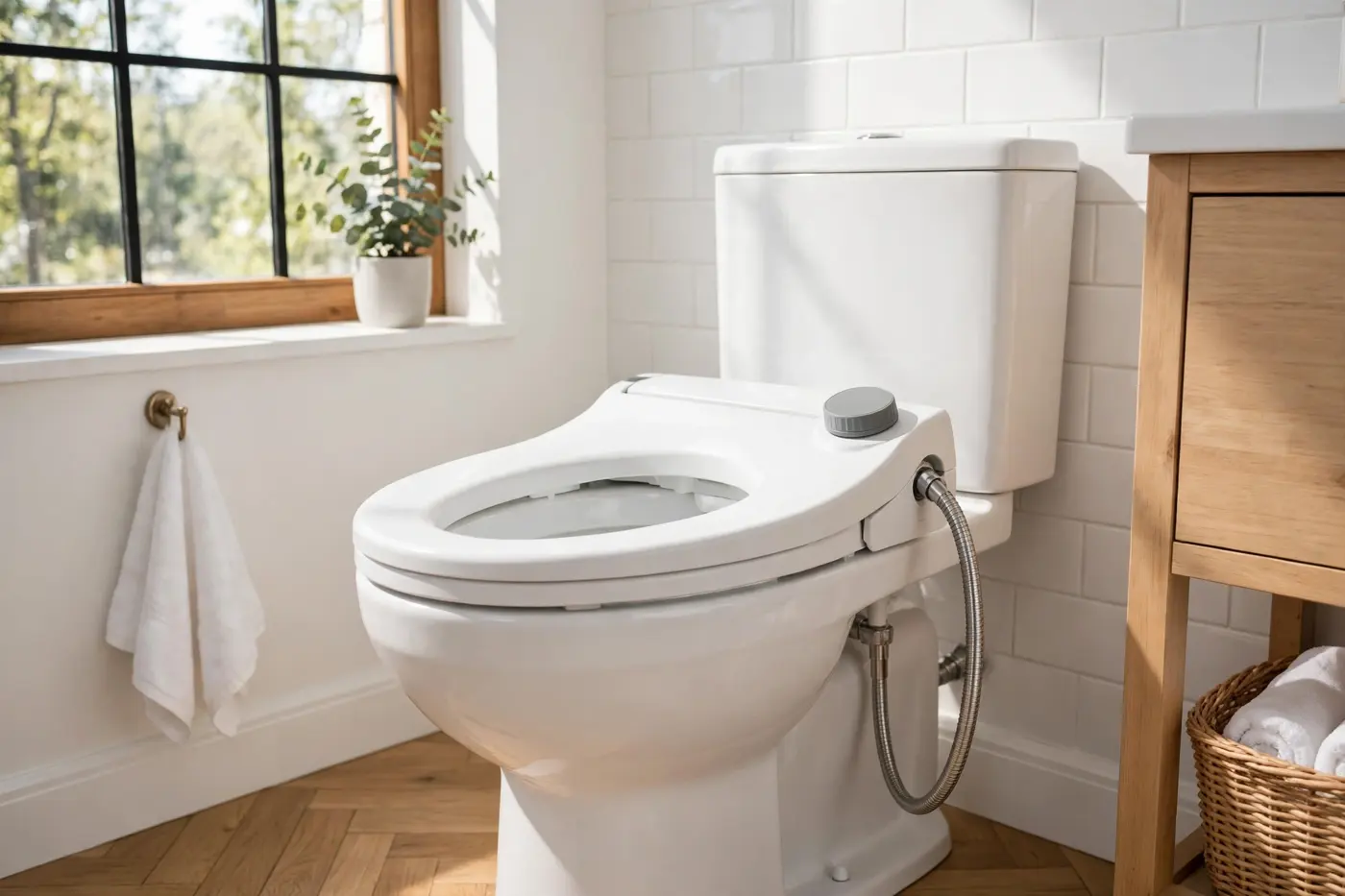
Bidet Installation in Fountain Valley, CA
A bidet attachment or bidet seat can be fitted to most toilets using the existing supply line — one call connects you with a local toilet specialist who checks fit, water, and power first.
📞 Call Now — (714) 410-0362Reasons Fountain Valley homes add a bidet
People ask for a bidet for comfort, for gentler cleaning, for help after surgery, or to cut down on paper use. The fitting itself is modest — the key is choosing the right style for your bowl and your bathroom.
Gentler daily cleaning
A controlled water spray cleans with less friction than paper alone.
See how it fits →Help after surgery or injury
Reaching can be hard while healing. A bidet reduces twisting and strain.
See how it fits →Support for older family members
Simple dial controls and a steady spray support more independence at home.
See how it fits →Less paper in the home
Many households use far less paper once a bidet is part of the routine.
See how it fits →Warmth in winter months
Powered seats can add warm water and a heated ring for comfort.
See how it fits →A cleaner rinse for children
Adjustable pressure lets each user set a gentle level that suits them.
See how it fits →A bidet does not need a bathroom remodel. Both main styles work with the toilet you already have. The attachment keeps your current seat and adds a spray unit beneath it. The bidet seat replaces your seat with a unit that carries the spray, controls, and — on powered models — heating inside the seat itself. Either way, water comes from the same supply line that fills your tank, through a T-fitting added during the visit.
What holds people back is usually fit and fittings: Will it match a round bowl? Is there room for the hose? Is there an outlet for a heated model? Those are check-first questions, and they are answered on your actual toilet, not from a box label. That is the whole point of a proper installation visit — measure, check the valve and hose run, confirm power if needed, then fit and test.
From paper-only to a calm water rinse
The left side is the setup most homes start with. The right side is the same toilet after a careful fitting and a full leak test.
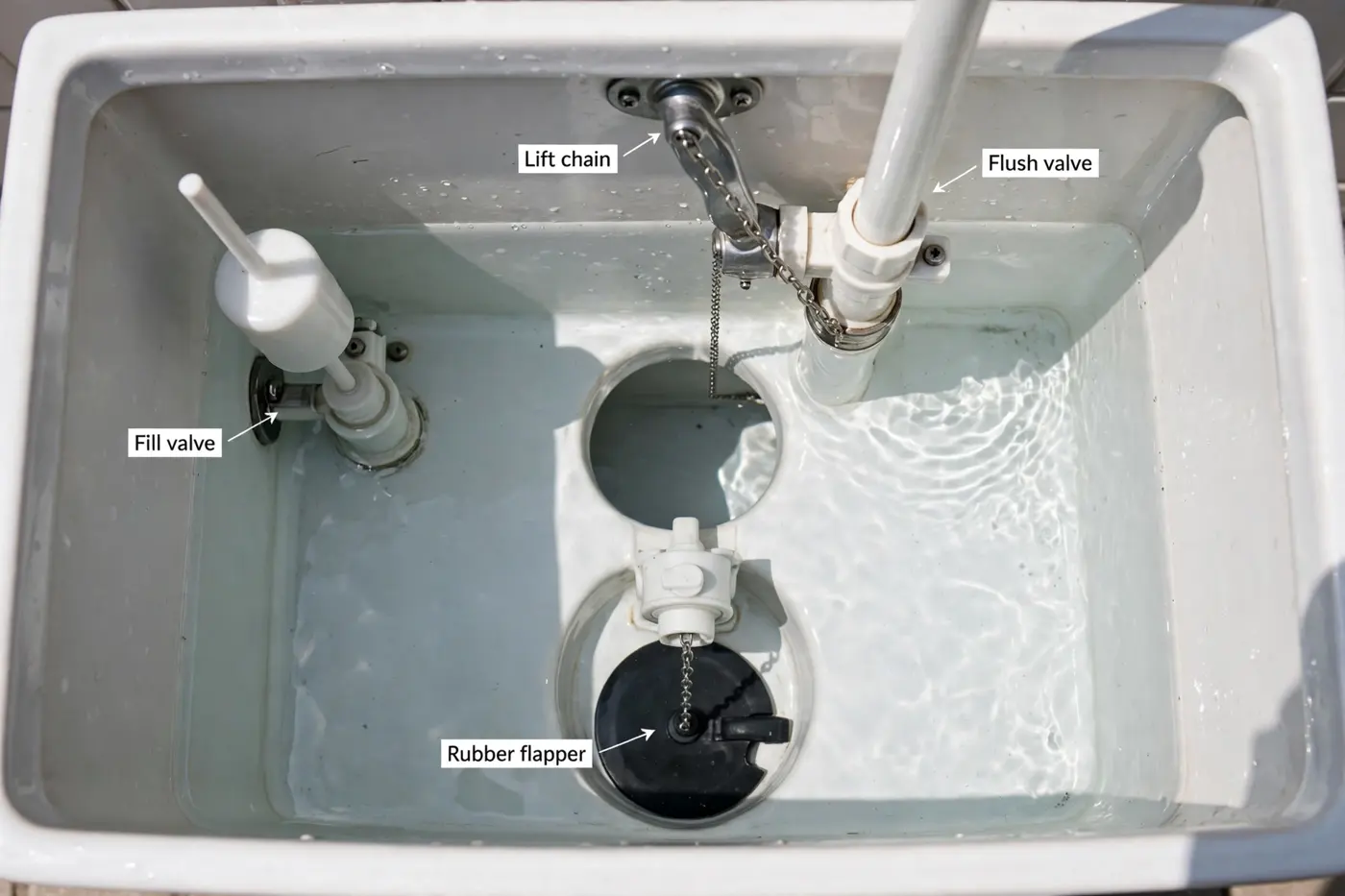
Paper-only cleaning, an aging seat, and no spray option — plus unanswered questions about hose room, pressure, and power.
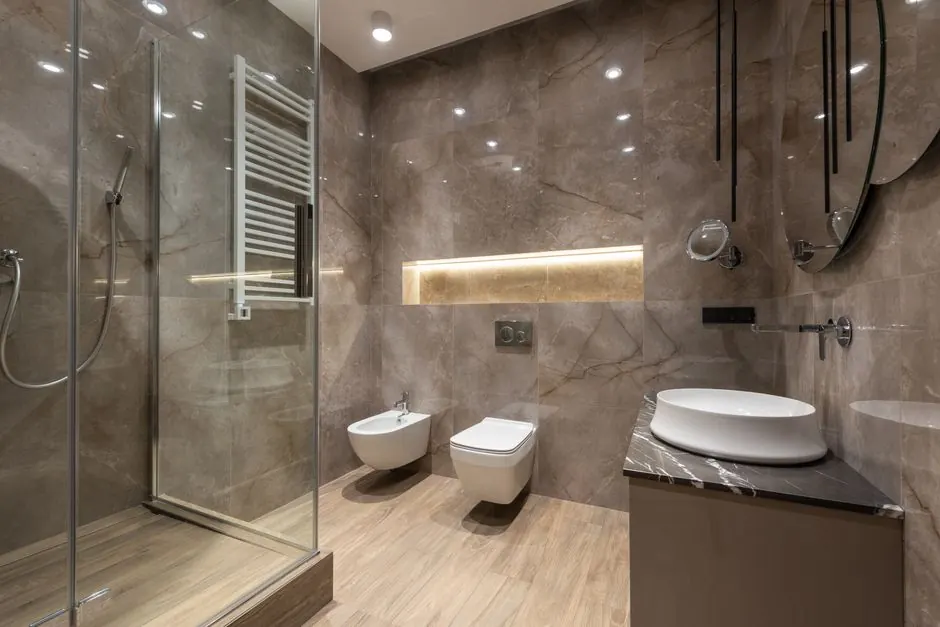
Bidet fitted to the bowl shape, fed from the supply line with checked fittings, spray angle and pressure tested, and controls explained before the visit ends.
The test at the end matters. The technician runs the spray with the lid set for testing, checks the nozzle reach and angle, wipes each new joint dry, and runs the spray again to confirm every fitting stays dry under pressure. You learn where the shut-off valve is and how the dial or panel responds, so the first week of use feels familiar, not new.
How a bidet installation visit works, step by step
The toilet stays in place. The work happens at the seat bolts and at the supply line behind the bowl.
Check bowl shape and seat fit
The bowl is measured for round or elongated shape and the bolt spread is confirmed. Tank clearance is checked too, since a bidet seat is thicker at the back than a plain seat. If your toilet is a one-piece design with a curved tank, the technician checks hose access before anything is opened.
Check water supply and valve
The shut-off valve behind the toilet is tested and the supply line is inspected. The bidet feed is taken from this line, so the valve must close fully and the threads must be sound. If the valve is worn, that is flagged first — see supply line and valve replacement.
Check power for heated models
For a powered bidet seat, the technician confirms a ground-fault outlet within safe cord reach of the toilet. Attachments and cold-water seats skip this step entirely because they run on water pressure alone. No outlet nearby does not end the project — it guides the style choice.
Fit the T-valve and hose
Water is shut off (see how to shut off water to a toilet), the supply line is opened at the tank inlet, and a T-fitting is added so one path fills the tank and the other feeds the bidet. The bidet hose is routed with a gentle curve, clear of the flush parts, and each joint is sealed and snugged by hand tools.
Mount the attachment or seat
An attachment is set under your current seat on its mounting plate. A bidet seat is mounted on its bracket, aligned to the bowl edge, and locked into place. Controls — side dial, side panel, or remote — are set where the main user can reach them with ease.
Test spray, pressure, and every joint
Water is turned back on. The spray is run, pressure is adjusted from gentle to firm, nozzle position is checked, and every new joint is wiped and re-checked dry. If the seat is powered, warm water and seat heating are tested as well, and the shut-off point is shown to you.
Checks to do before you call for a bidet
These quick checks make the call short and the visit smooth. None of them need tools beyond a tape measure. The same checks work in apartments and condos, not just houses.
- Measure the bowl from the seat bolts to the front edge to learn round or elongated shape.
- Look behind the toilet and confirm you can see and reach the shut-off valve.
- Check whether an outlet sits on the wall near the toilet, and note which side it is on.
- Note your current seat style — standard, soft-close, or raised — and what you want to keep.
- Decide who will use the bidet most, so control placement can suit that person.
Stop point: if the shut-off valve will not turn, leaks at the stem, or the supply line shows rust or bulging, do not force it. That valve and line should be sorted first, and the technician can handle both in the same plan — see supply line and shut-off valve replacement.
Living with a bidet: cleaning and care
Care is light. The nozzle on most units rinses itself before and after each use. A soft cloth and mild cleaner keep the seat and dial clean; harsh powders can dull the finish and dry out seals. In Fountain Valley, hard water can leave mineral film on the nozzle tip over time — a gentle wipe during regular bathroom cleaning keeps the spray pattern even.
If pressure feels weaker months later, the small inlet screen where the hose meets the unit may hold grit. That screen can be rinsed clean once the water is shut off. Keep the original seat if there is any chance you will move or return the bathroom to its prior setup; both attachments and bidet seats come off cleanly, and the supply line returns to a single feed with the T-fitting removed.
Few parts move, so few things wear. Hinges and mounting brackets take the same daily load as any seat, and the hose and fittings should stay dry for the life of the install. A damp cabinet floor or a wet hose is a signal to call, not to tighten blindly.
Attachment vs bidet seat, water pressure, backflow, and the outlet question
Two styles cover almost every home. The right one depends on your bowl, your water, and whether you want heat. This section walks through each factor the technician weighs during a bidet fitting.
Attachment: the simple add-on
An attachment is a slim plate with a spray nozzle that mounts under your existing seat, using the same bolts. A dial at the side controls pressure, and some models add a second nozzle setting or a warm-water feed taken from a nearby sink line. There are no motors and no cords. Attachments suit renters, first-time bidet users, and bathrooms with no outlet near the toilet. Because the unit is thin, your current seat keeps nearly its normal height and feel.
The trade-off is control. Pressure follows your home water pressure, so the dial does the fine tuning. Water is at supply temperature unless a warm feed is added. For many homes that is plenty — the rinse does the work, and the simple build leaves little to maintain.
Bidet seat: the full replacement seat
A bidet seat replaces your seat entirely. Inside the thicker rear housing sit the spray wand, controls, and — on powered models — a water heater and a heated ring. Users can often adjust spray position, pressure, and temperature, and some models add a warm-air dry cycle and a night light. Non-electric bidet seats exist too: they use water pressure alone and keep a slimmer profile, but they do not heat water or the ring.
Fit is the gate here. The seat must match round or elongated shape, the mounting bracket needs flat room at the back of the bowl, and the hose and cord need a clean path. One-piece toilets with a skirted or curved rear can narrow that room. The technician checks these points on your toilet and tells you plainly which styles fit well and which would sit poorly.
Water pressure and backflow basics
Bidets sip water; they do not demand much flow. Normal home pressure gives a firm spray at the top of the dial and a gentle one at the bottom. Very high pressure is tamed by the unit's own control and, where needed, the T-fitting arrangement. Very low pressure still works for attachments, though the spray will feel soft — the technician tests with your actual pressure during fitting, not a guess.
Backflow protection is built into the plan. The bidet is fed from the clean supply line before the tank, through fittings that keep flow moving one way, and many units carry a guard at their inlet. The nozzle itself stays above bowl water and retracts behind a shield when idle. During the visit, every new joint is pressure-tested and wiped dry, and you are shown the shut-off valve so you can stop the feed at any time.
The electrical outlet note for heated seats
Heat needs power. A heated bidet seat must plug into a ground-fault outlet — the kind with small test and reset buttons — placed within cord reach and clear of splash. Many older Fountain Valley bathrooms have one outlet near the sink only, which may be too far or on the wrong wall. In that case you have real choices: pick a non-electric seat or attachment that needs no power at all, or have an outlet added near the toilet by a qualified electrician as its own project before the seat is fitted. What you should not do is run an extension lead across a wet floor. The technician will check the outlet position during the visit and help you choose a style that suits the room as it stands.
Bidet attachment
- Sits under your current seat — seat stays in place
- Runs on water pressure, no outlet needed
- Side dial controls spray pressure
- Slim profile, simple care, easy to remove later
Bidet seat
- Replaces the seat; controls built into the unit
- Powered models add warm water and a heated ring
- Needs bowl shape and rear clearance confirmed
- Ground-fault outlet needed for heated models
If you are also changing the seat itself, read our toilet seat replacement page — measuring and hinge choices there apply to bidet seats as well. And if your toilet is being replaced soon, it can make sense to plan the bidet and the toilet installation together, so bowl shape, hose run, and outlet position are settled in one plan.
Bidet work often pairs with these services
A bidet visit touches the seat, the supply line, and sometimes the whole toilet. These pages cover the connected jobs, and you can see every area we cover on areas we serve.
Toilet Seat Replacement
New standard or soft-close seats, measured and fitted securely.
View service →Supply Line & Valve
Fresh supply lines and shut-off valves that turn with ease.
View service →Toilet Installation
New toilets set, sealed, and tested in new or remodeled bathrooms.
View service →Toilet Leak Repair
Drips at the tank, base, or supply line found and fixed.
View service →Bidet installation questions
What is checked first during a bidet installation in Fountain Valley?
The technician checks the bowl shape, seat bolt spread, water supply valve, and hose reach first. For a powered bidet seat, the location of a ground-fault outlet near the toilet is also checked. The scope is confirmed with you before any work starts.
What is the difference between a bidet installation attachment and a bidet seat?
An attachment is a thin unit that sits under your current seat and adds a spray nozzle, run by a side dial and water pressure alone. A bidet seat replaces the whole seat and can add warm water, a heated ring, and a remote or side panel. Both are covered on this bidet installation page, and the technician fits the style you choose.
Does a bidet installation need an electrical outlet?
Attachments and non-electric bidet seats need no outlet at all — they run on water pressure. Heated bidet seats do need power for warm water and a heated ring, and they require a ground-fault outlet within cord reach. If no outlet is near the toilet, the technician will explain your options during the visit.
Will a bidet installation work with my current toilet in Fountain Valley?
Most standard round and elongated bowls accept either an attachment or a bidet seat. One-piece toilets with a curved tank and some compact bowls can limit hose access or seat fit. The technician checks your bowl shape and tank clearance first and tells you plainly if a style will not fit well.
How is backflow handled during a bidet installation?
The water feed is taken from the toilet supply line through a T-fitting, and many bidet units include a backflow guard in their inlet or hose. The technician checks the fittings, tests for leaks at each joint, and shows you the shut-off point when the work is done. Clean supply water only flows toward the nozzle, never back into the line.
Can a bidet installation be removed later if I move or change my mind?
Yes. Attachments and bidet seats are fitted to the seat bolts and supply line, so they can be removed and the original seat refitted. Keep the original seat and hardware if you rent or plan to move. The technician can note what was changed during your bidet installation visit.
Want a bidet fitted and tested in one visit?
Call during open hours — Mon–Fri 7:00 AM–10:00 PM, Sat 8:00 AM–10:00 PM, Sun 7:00 AM–9:00 PM — tell us your bowl shape and style choice, and we will connect you with a local toilet specialist.
📞 Call Now — (714) 410-0362 Prefer email? [email protected]