TL;DR
Problem: A dropped bottle or tool has knocked a chip out of your toilet bowl, and you are not sure if it is cosmetic or serious.
Solution: Judge the chip first: a small surface chip with no crack lines can be cleaned, filled with a porcelain repair compound, sanded smooth and sealed. Any crack changes the answer.
When to call: Call a local specialist if you see a crack, the chip is at the rim, bolt holes or base, or the bowl leaks at all. Call (714) 410-0362 during open hours.
In this guide
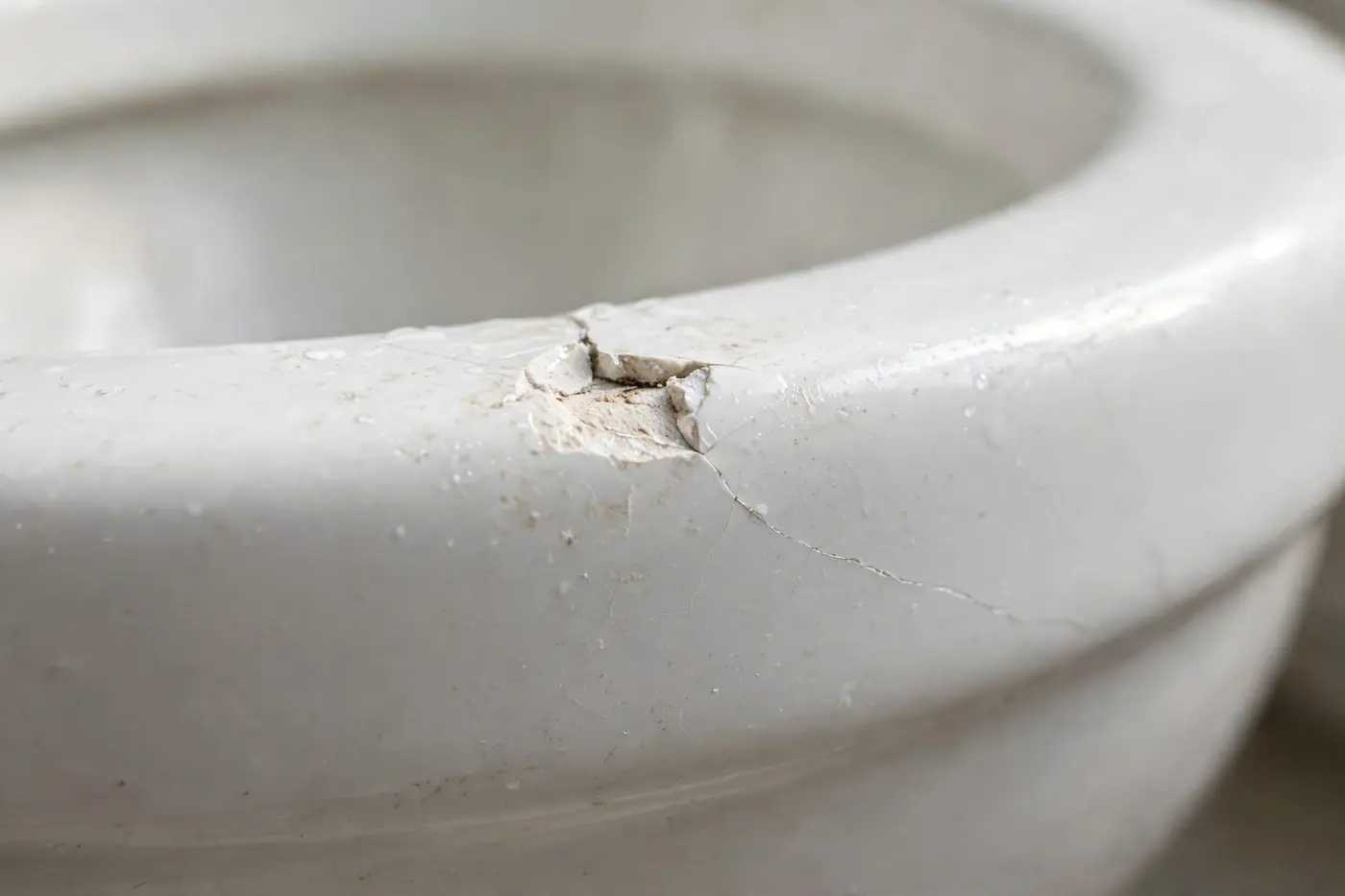
It usually happens in a second: a perfume bottle slips, a wrench drops during another repair, a child's hard toy lands wrong — and there is a bright little crater in the bowl where the smooth glaze used to be. The first question is always the same: is this just ugly, or is it the start of a bigger problem? The honest answer is that it depends on three things — how deep the chip goes, whether any crack runs from it, and where on the toilet it sits. This guide shows how to judge those three things, how to carry out a sound repair on a chip that qualifies, and how to recognize the damage that should end in replacement instead.
Toilet porcelain is a ceramic body covered in a glass-like glaze. The glaze is what makes the surface smooth, shiny and resistant to staining and water. A chip breaks that shell. Left open, the exposed material underneath absorbs water and mineral color, darkens, and can feel rough — and at a stress point, a chip can be the start of a crack. Sealed promptly and in the right place, though, a small chip is a minor repair that can serve for years.
Judge the damage: chip, crack, or worse
Clean and dry the area, then look closely in good light. A true chip is a shallow crater: edges you can feel, solid porcelain around it, and no lines radiating out. Run a fingernail gently across the surface around the chip. A crack announces itself as a fine line your nail catches on, sometimes hairline-thin, running away from the impact point. Also check the same spot from the other side where you can — the outside of the bowl, the underside of the rim — because a crack that shows on both sides goes through the material.
Depth matters as well. A chip that only lifts the glaze and a sliver beneath it is a surface repair. A chip deep enough to change the shape of an edge — the rim contour, a bolt-hole flat, the base outline — is structural damage wearing a small disguise. And any chip accompanied by a leak, a new stain on the floor, or a change in how the toilet sounds or flushes should be treated as serious until a technician has looked, because those signs mean water is already finding a path.
Step-by-step: repairing a small porcelain chip
Clean the chip and the area around it
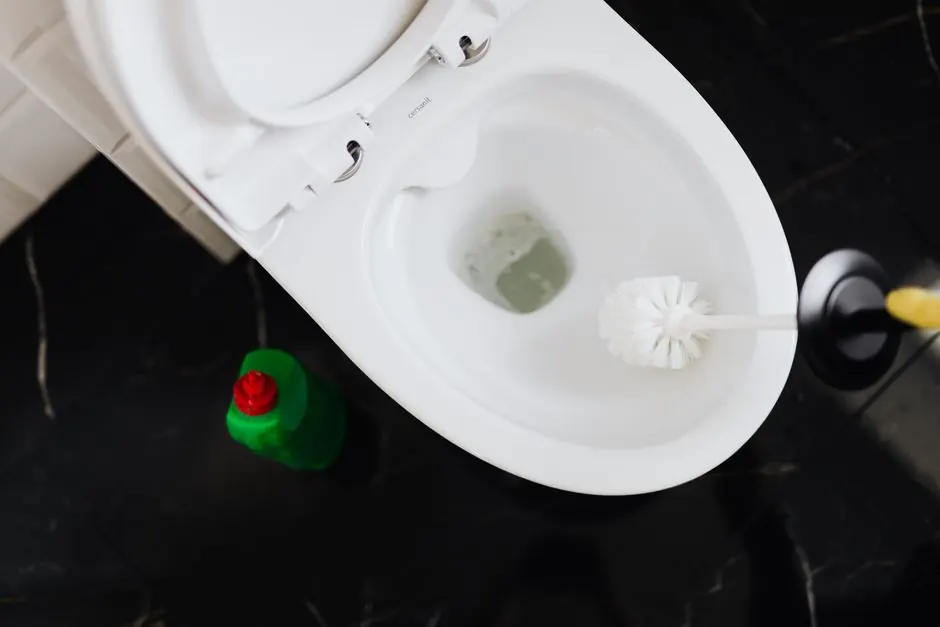
Scrub the spot with a mild cleaner and a brush, then wipe it down and let it dry fully. Any soap film, moisture, or loose grit left in the crater will weaken the bond of the repair compound. If the chip is inside the bowl below the waterline, lower the bowl water first: shut the supply valve, flush, and sponge the remaining water down so the work area stays dry. Our shut-off guide covers the valve steps if you have not used yours before.
Remove any loose fragments and rough edges
Pick out any loose slivers with tweezers and feel the crater edges with a fingertip. The compound needs solid material to grip. If an edge crumbles as you touch it, or the crater keeps growing as you clean it, stop — crumbling porcelain is not a surface chip, and that bowl needs an in-person assessment.
Apply the porcelain repair compound in thin layers
Use a two-part epoxy porcelain repair compound made for fixtures, matched to your bowl color as closely as you can — whites vary, so compare in daylight if the chip is in a visible spot. Press a small amount into the crater with a plastic applicator, slightly overfilling it, because the compound shrinks a touch as it cures. For a deeper chip, build up in two thin layers rather than one thick lump; thin layers cure harder and bond better.
Let it cure fully, then sand smooth
Respect the cure time on the compound packaging — sanding early tears a soft fill. Once cured, wet-sand with fine waterproof paper, starting around 400 grit and finishing finer, until the patch is flush with the surrounding glaze and your fingertip cannot find the edge. Keep the sanding tight to the patch so you do not dull a ring of healthy glaze around it.
Seal, refill, and test through normal use
Wipe the patch clean, apply the sealer or topcoat that comes with the repair system if one is included, and let it set. Turn the water back on, let the bowl refill, and flush several times. Check the patch after a day of household use and again after a week. A good repair stays smooth, holds its color, and shows no darkening line at its edge — that darkening line, if it appears, means water is getting behind the fill and the patch should be redone or assessed.
Location decides: where a chip can and cannot be filled
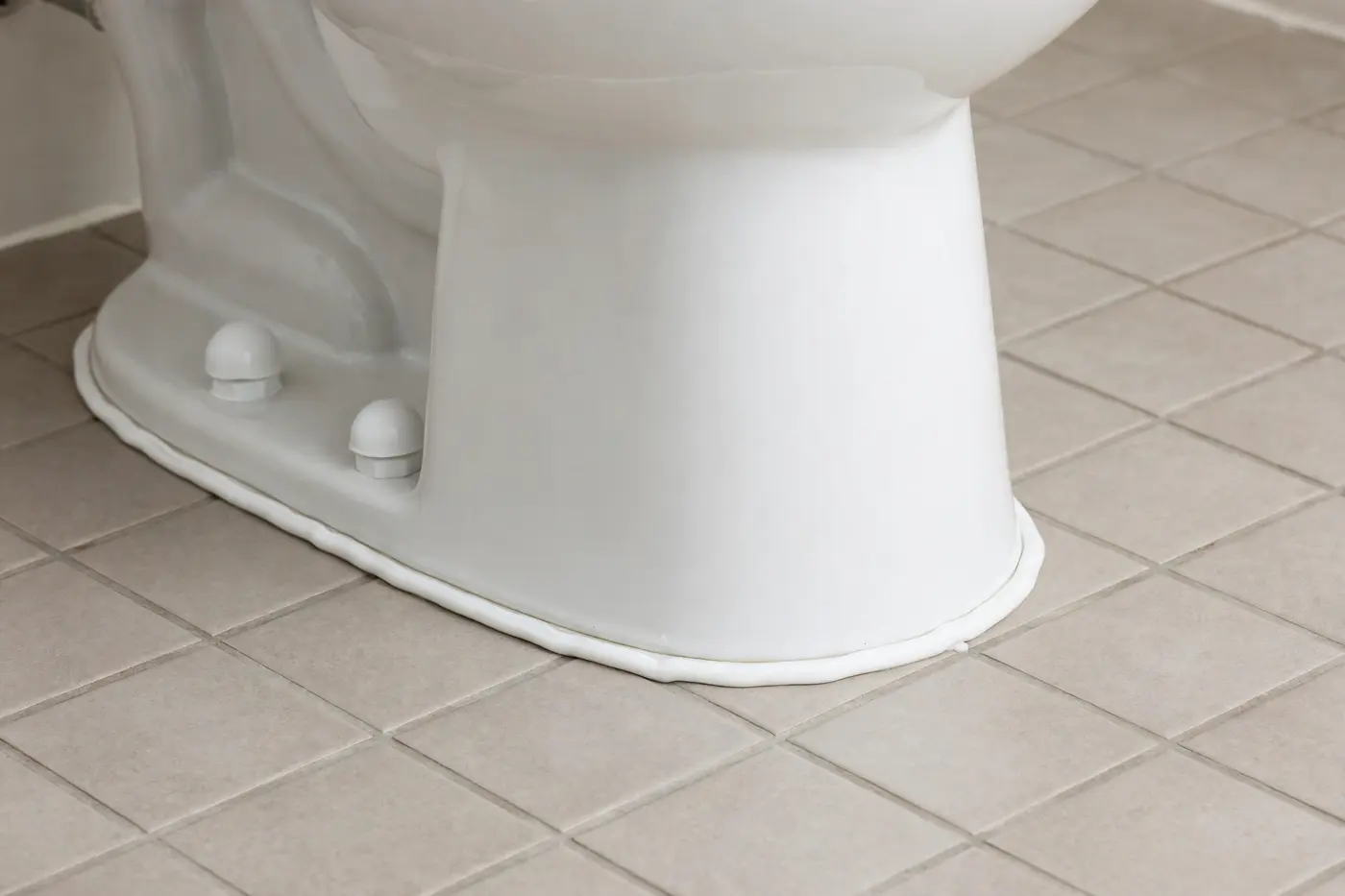
Position is the quiet deciding factor. A chip on the outer bowl wall or the inner bowl surface, away from moving water paths, is the straightforward case the steps above are written for. A chip at the rim, where flush water passes through the rim channel and jets, sits in constant moving water and takes pressure pulses with every flush — fills there fail early. A chip at a seat bolt hole or a tank bolt hole is under mechanical load every day, and filling it does not restore the strength the bolt needs; those belong to a technician's judgment, and the same goes for chips at the base, where the bowl carries weight and the seal sits. Tank lid chips are the exception in the other direction: the lid carries no water and no load, so a lid chip is nearly always a safe cosmetic fill, and the main care is matching color since the lid is what everyone sees.
When replacement is the honest answer
Some damage should not be filled at all. Any crack — in the bowl, the tank, or between them — means the fixture can fail without warning, and a tank crack can release a full tank of water onto the floor. Multiple chips appearing on an old bowl suggest the porcelain has gone brittle with age, and each new impact will find the next weak spot. A chip with a leak, a chip at a load point, or a chip on a toilet that already has other end-of-life faults — worn internals, a damaged flange, recurring clogs from worn rim jets — all argue for putting the effort into a new fixture instead. Our toilet replacement page walks through how that visit works, including the flange check that happens while the old toilet is up.
Stop point: cracks, crumbling edges, chips at bolt holes, rim or base, and any leak at all are past the fill-and-seal line. Photograph the damage before you call — a clear photo helps the technician judge what to bring. See the areas we serve page for coverage across Fountain Valley and nearby cities.

Preventing the next chip
Most chips come from hard objects falling a short distance — which means most are preventable with small changes around the bowl. Keep a soft mat or a folded towel on the closed lid when you set bottles, tools, or hair appliances down during a routine, rather than balancing them on the porcelain rim or tank edge. During other repairs in the bathroom, cover the bowl with a piece of cardboard or an old blanket before wrenches come out; the one minute that takes is the whole difference between a plumbing job and a plumbing job plus a chip.
Storage helps too. Heavy items that live on open shelves directly above the toilet are a chip waiting for its moment — move the heaviest bottles and jars to a lower shelf or a cabinet, especially in homes with kids reaching for things. And when you fit a new seat, choose one with bumpers in good condition and hinges that hold it steady: a seat that slams or shifts knocks its own hardware against the rim thousands of times, and while that wear is slow, it is constant. Treating the bowl as what it is — a hard but brittle shell with a thin glass skin — keeps the surface intact for the life of the fixture.
Questions about toilet porcelain chip repair
Can a chipped toilet bowl be repaired safely?
A small chip that only breaks the glazed surface, sits away from the rim jets and water passages, and has no crack running from it can usually be filled with a porcelain repair compound and sealed. The repair restores a smooth, water-resistant surface. Chips at the rim, at bolt holes, or anywhere a crack line extends from the chip are a different case and should be assessed in person.
What is the difference between a chip and a crack in a toilet bowl?
A chip is a small piece of surface material knocked out, with clean edges and solid porcelain around it. A crack is a line that runs through the material and can keep growing under stress and water pressure. Filling a crack does not stop it spreading, and a cracked bowl or tank can fail suddenly, so cracks point to replacement rather than repair.
Will a repaired toilet bowl chip hold up to cleaning?
A well-cured fill holds up to normal cleaning with mild products and a soft brush. Avoid scouring the repaired spot with abrasive pads or strong grit cleaners, which can dull or lift the fill edge over time. If the fill ever feels raised or rough when you run a fingertip over it, it can be re-sanded lightly and resealed.
Why does a chipped toilet bowl stain faster than the rest of the bowl?
The glaze on a toilet is the smooth, glass-like layer that resists staining. A chip breaks through that layer and exposes the rougher material beneath, which grabs mineral color and grime. That is why an unrepaired chip darkens even when the rest of the bowl cleans up well, and why sealing the chip early keeps it from becoming a permanent stain.
When does a chipped toilet bowl mean the toilet should be replaced?
Replacement is the right call when there is any crack, when the chip sits at a bolt hole, the rim, or the base, when the bowl leaks, or when several chips show the porcelain is brittle with age. A technician checks the damage, the bowl age and the flange condition first, and the scope is confirmed with you before any work starts.