Quick answer
Problem: A toilet that keeps running sends clean tank water into the bowl hour after hour, even when no one flushes.
Solution: Confirm the leak with a dye test, check the flapper and water level, and replace the worn seal or valve so the tank holds water again.
When to call: If the running never stops, refills happen every few minutes, or a new flapper does not fix it, call for running toilet repair during open hours.
In this guide
A running toilet is easy to ignore. The sound is soft. The bowl looks normal. Life goes on. Yet inside the tank, water is moving when it should be still, and that quiet movement adds up to a large amount of water over days and weeks. This guide stays focused on one thing: gallons. How many gallons can a running toilet waste in a day? How does that grow over a month? And how can you tell which kind of running you have, so you fix the right part?
If you already know your toilet needs hands-on help, you can read about our running toilet repair service or look at fill valve and flapper replacement. If you want to understand the waste first, start with the math below. The numbers are ranges, because every toilet leaks at a different rate. Your toilet may sit near the low end or the high end. Either way, the pattern is the same: small leaks run for many hours, and many hours turn small leaks into large totals.
The gallon math, day by day and month by month
Think about a slow trickle first. Picture water leaking past a worn flapper at a rate so slow you can barely see it. That trickle can still pass about 2 to 4 gallons each hour. Multiply 3 gallons per hour across a full day and you get about 72 gallons in one day. Over a 30-day month, that same trickle can waste about 2,160 gallons. That is water that entered your home, filled the tank, slipped into the bowl, and left through the drain without ever being used for a flush.
Now picture a stronger leak. The flapper is warped and never seals. Water flows in a steady stream. That flow can pass 8 to 15 gallons each hour. At 10 gallons per hour, the daily total is about 240 gallons. Over 30 days, the total reaches about 7,200 gallons. A stronger flow, such as a fill valve that never shuts off and sends water down the overflow tube all day, can waste several hundred gallons in a single day and well over 10,000 gallons in a month if it runs nonstop.
There is also a third pattern that fools many people. The toilet seems fine most of the time. Then, once in a while, it refills on its own for 20 or 30 seconds. That is phantom flushing. Each refill may use half a gallon to a gallon. If it happens 20 times a day, that is 10 to 20 gallons a day, or 300 to 600 gallons a month. It is less than a nonstop leak, but it still signals a seal that is failing. Left alone, phantom flushing often grows into constant running as the flapper wears further.
To put these totals in plain terms, a single normal flush uses roughly 1.3 to 1.6 gallons in many modern toilets, and more in older models. A trickle that wastes 72 gallons in a day wastes about as much water as 45 to 55 normal flushes. A month of that trickle equals well over a thousand flushes that no one ever needed. That is why a running toilet deserves prompt attention even when the bathroom still works fine.
Three kinds of running and how much each one wastes
Not all running toilets waste water at the same rate. Knowing which kind you have helps you judge urgency and helps you describe the problem clearly if you call. Listen at different times of day. Check in the morning before anyone uses the bathroom. Check again at night when the house is quiet. The timing tells you a lot.
The first kind runs without stopping. You hear water the whole time you stand near it. The tank never seems full. This kind wastes the most water, often hundreds of gallons per day. Common causes include a flapper stuck open, a chain caught under the flapper, or a fill valve that cannot shut off. The second kind runs in cycles. It fills, stops, sits quiet for a while, then fills again. This is the phantom pattern. It points to a slow leak out of the tank, most often past the flapper or the flush valve seat. The third kind runs only right after a flush, then stops once you jiggle the handle. That points to a chain that is too long, a handle that sticks, or a flapper that lands off-center. It wastes the least per day if someone catches it each time, but it wastes a great deal on days when no one notices.
Fountain Valley homes add one more factor. Many houses here were built in the 1960s and 1970s, and many toilets have been repaired several times over the years. Mixed old and new parts can fit poorly together. A new flapper on a pitted old flush valve seat may still leak. Hard water also wears rubber seals faster, so a flapper that should last for years can warp sooner. If your toilet has needed the same fix more than once in a short span, the seat or the valve itself may be the true problem, not just the flapper.
Step 1: Run the dye test
Color the tank water and wait
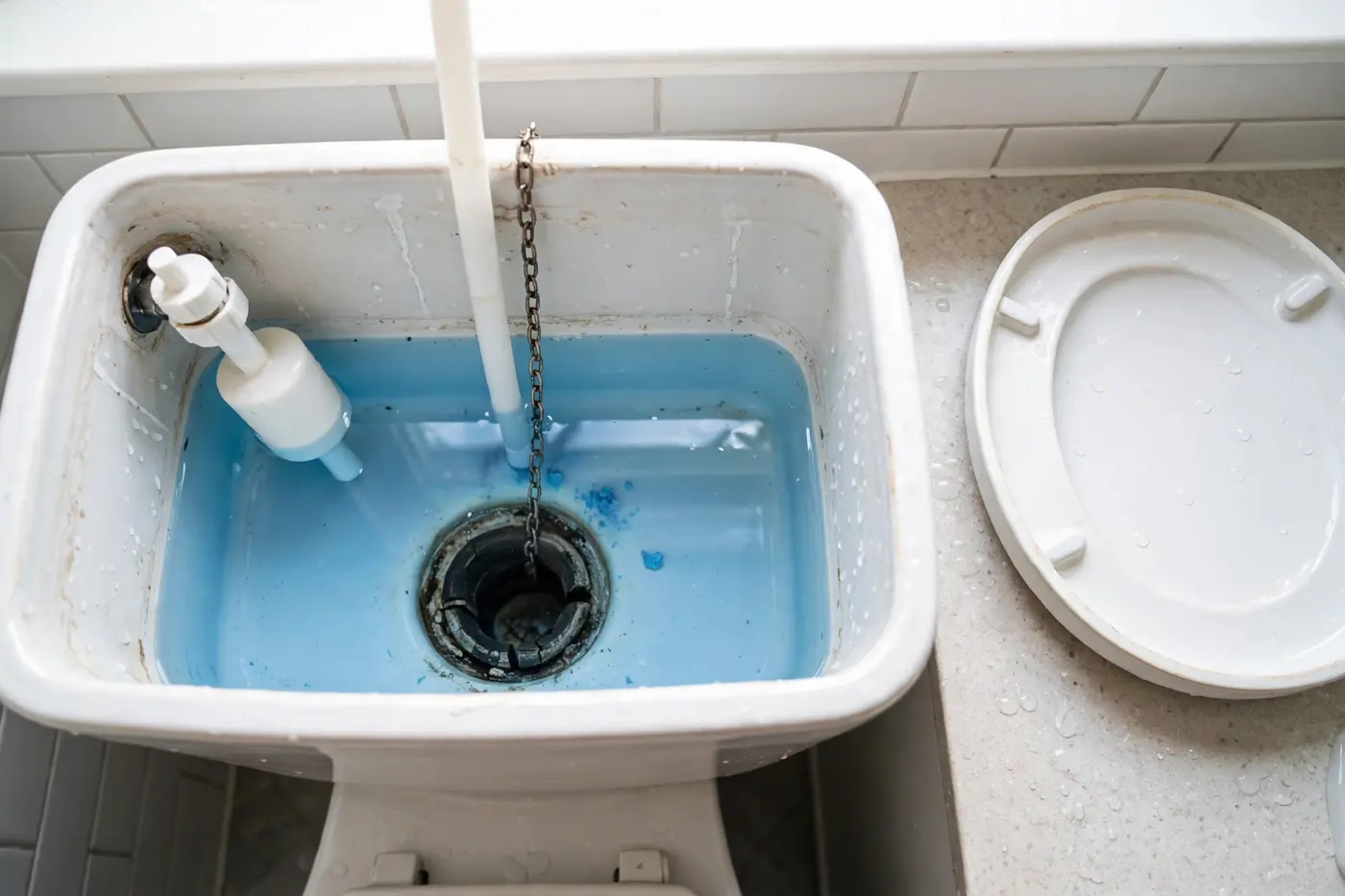
Remove the tank lid and set it on a towel. Add several drops of food coloring to the tank water. Do not flush. Wait about 20 minutes. Then look in the bowl. If color shows up in the bowl, tank water is leaking past the flapper or the seat. If the bowl stays clear, the tank is holding water and the problem sits elsewhere, such as the fill valve or the water level. This test takes no tools and gives you a clear yes or no answer.
Write down what you see. Note the time of the test and how fast color appeared. Fast color, within five minutes, points to a larger leak path and higher daily waste. Slow color points to a smaller leak that still needs a fix. If you have two bathrooms, test both toilets. It is common for one toilet to test clear while the other leaks. Testing both keeps you from fixing the wrong fixture.
Step 2: Check the flapper by hand
Feel the seal and test it with a flush
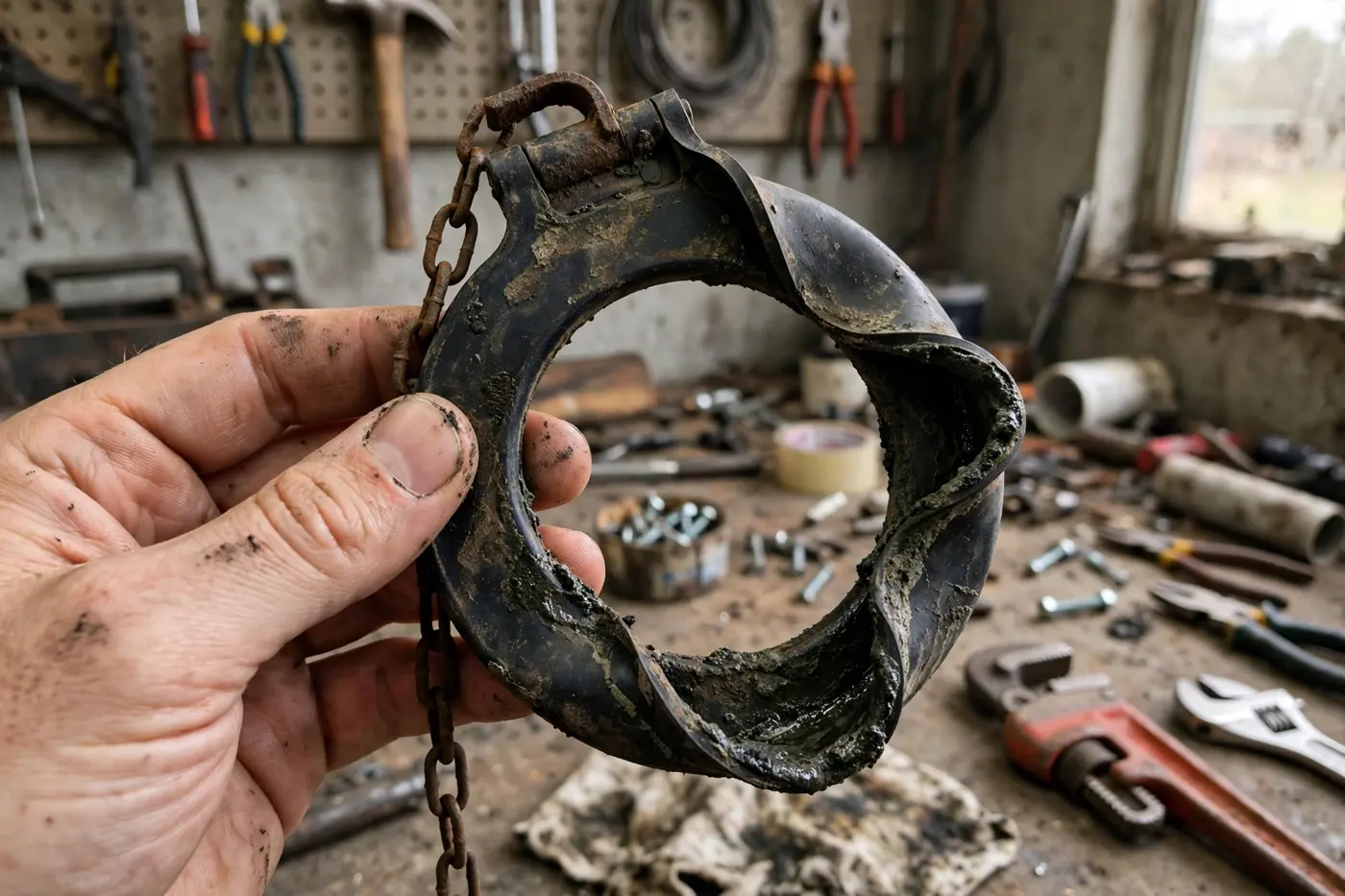
Reach into the tank and press the flapper down gently. Then flush and watch the flapper fall. It should land flat and centered. Run a finger along its edge. If the rubber feels stiff, rough, slimy, or curled, it can no longer seal well. Mineral crust from hard water can also hold one edge up. A flapper in poor shape is the top cause of wasted gallons, and it is also the part a technician checks first during a visit.
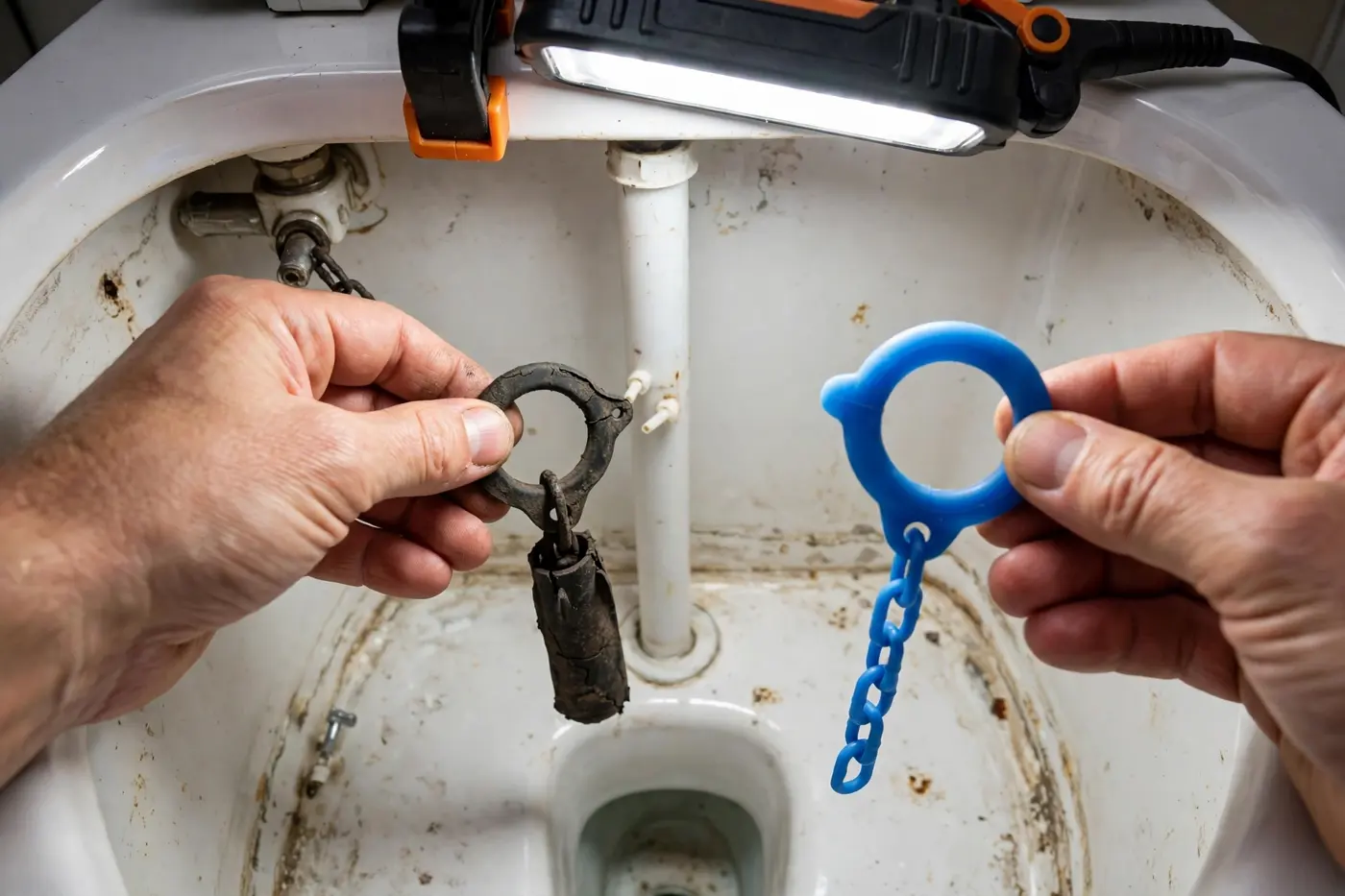
If the flapper looks worn, replacing it is a common home fix. Match the size and style to your flush valve. After fitting the new flapper, run the dye test again. A clear bowl after 20 minutes means the new seal is holding. Color in the bowl with a new flapper means the valve seat below it is rough or pitted. At that point the fix moves beyond the flapper alone. Read more about the parts involved on our toilet parts repair page.
Step 3: Check the water level and overflow tube
Confirm the tank is not filling too high
Look at the tall open tube in the middle of the tank. That is the overflow tube. The water line should sit below the top of that tube, often about an inch below. If water spills over the top and runs down the tube, the fill valve is set too high or fails to shut off. That spill goes straight to the bowl and can waste a large number of gallons each day. Mark the water line, wait an hour without flushing, and check whether the level has dropped or the tube is still spilling.
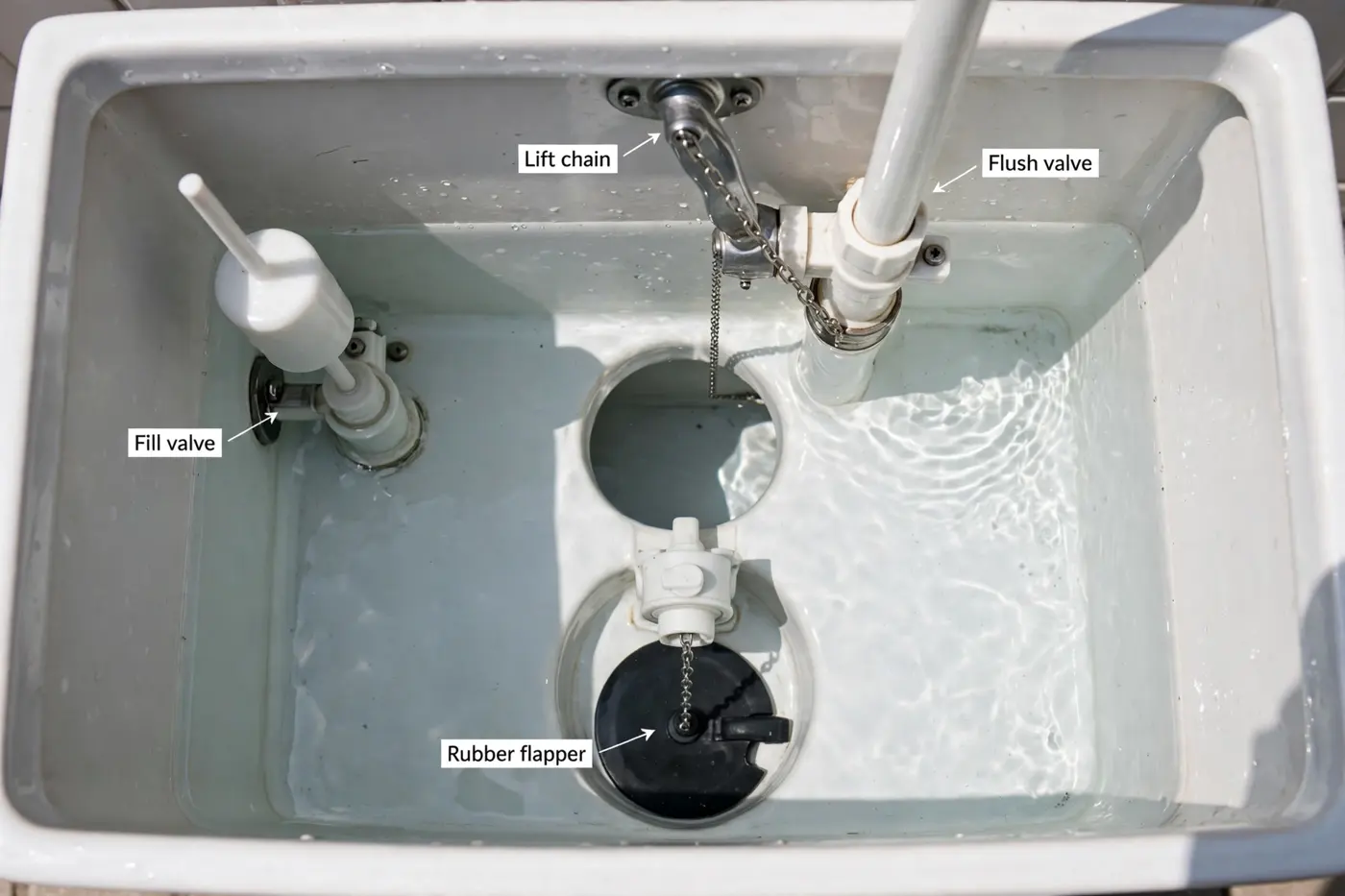
Many fill valves adjust with a screw or a clip on the float. Lowering the level slightly can stop overflow spill. After any change, flush twice and watch the refill. The valve should stop cleanly with no hiss. A valve that hisses, chatters, or starts again on its own is near the end of its life. Replacing a faulty fill valve stops both the noise and the waste. Details are on our fill and flush valve page.
Step 4: Check the chain and handle
The chain links the handle to the flapper. It needs a small amount of slack, about half an inch. Too much slack lets the chain slide under the flapper and hold it open. Too little slack holds the flapper up all the time. Watch a flush from above with the lid off. The chain should lift the flapper, then let it drop straight down. Also press the handle slowly. If it sticks, feels loose, or needs a jiggle each time, the handle or lever may be worn. Handle faults waste water in bursts, and they tend to get worse, not better.
While the lid is off, look for anything else out of place. Check that the refill tube points into the overflow tube but does not push deep inside it. Check for cracks in the overflow tube itself. A cracked tube lowers the true water line and can cause constant refilling. These checks take only a few minutes and they cover the causes behind most wasted gallons.
A simple way to track your gallons
Pick one quiet hour when no one will use the toilet. Note whether you hear a refill and how long it runs. Then think in blocks. A refill that runs for 30 seconds every 15 minutes adds up to 48 refills in 12 waking hours, plus more overnight. Even without a meter, that count tells you whether you face a small seep or a major waste problem, and it helps a technician understand the pattern when you call.
Where home fixes end
Home fixes work well for a worn flapper, a tangled chain, and a water level set too high. They stop working when the flush valve seat is damaged, the fill valve fails to shut off after adjustment, the overflow tube is cracked, or the tank parts no longer match. Forcing old parts can crack porcelain or cause a leak at the base. If water appears on the floor, if the toilet rocks, or if you smell a drain odor near the base, stop and call. Those signs can point to a toilet leak or a wax ring problem, covered on our wax ring replacement page.
When you call Toilet Repair Pro, the technician checks the flapper seal first, then the water level, the fill valve shutoff, the chain, and the flush valve seat. The scope is confirmed with you before any work starts. You can also browse service areas on our areas we serve page to confirm coverage for your street in Fountain Valley and nearby cities.
Frequently asked questions
How many gallons can a running toilet waste in one day?
A toilet with a steady trickle can waste 50 to 100 gallons in a day. A toilet where the flapper hangs open or the fill valve never shuts off can waste several hundred gallons in a day. The exact amount depends on how wide the leak path is and how long the water runs each hour.
How can I tell if my running toilet is wasting water at night?
Listen for refills when no one has flushed, and watch for a faint ripple in the bowl. You can also place a few drops of food coloring in the tank, wait 20 minutes without flushing, and check the bowl. Color in the bowl means tank water is leaking past the flapper or flush valve seat.
Does a running toilet that stops on its own still waste water?
Yes. This pattern is often called phantom flushing. The tank leaks down slowly, the float drops, and the fill valve tops the tank back up. Each refill may use a gallon or less, but repeated refills through the day and night add up to many gallons each week.
Which part wastes the most water in a running toilet?
A worn or warped flapper is the most common cause because it lets tank water leak into the bowl without stopping. A fill valve set too high can also waste water by sending water down the overflow tube. A technician checks the flapper seal first, then the water level and the fill valve shutoff.
When should I call for running toilet repair instead of watching it?
Call if the toilet runs nonstop, if you hear refills every few minutes, if jiggling the handle no longer helps, or if a new flapper does not stop the leak. Those signs point to a worn flush valve seat, a faulty fill valve, or a chain and handle fault that needs hands-on repair.
Also read
Keep learning with our guide on how to replace a toilet flapper and our guide to a toilet tank that will not fill. For hands-on help, see running toilet repair in Fountain Valley and check all areas we serve.